



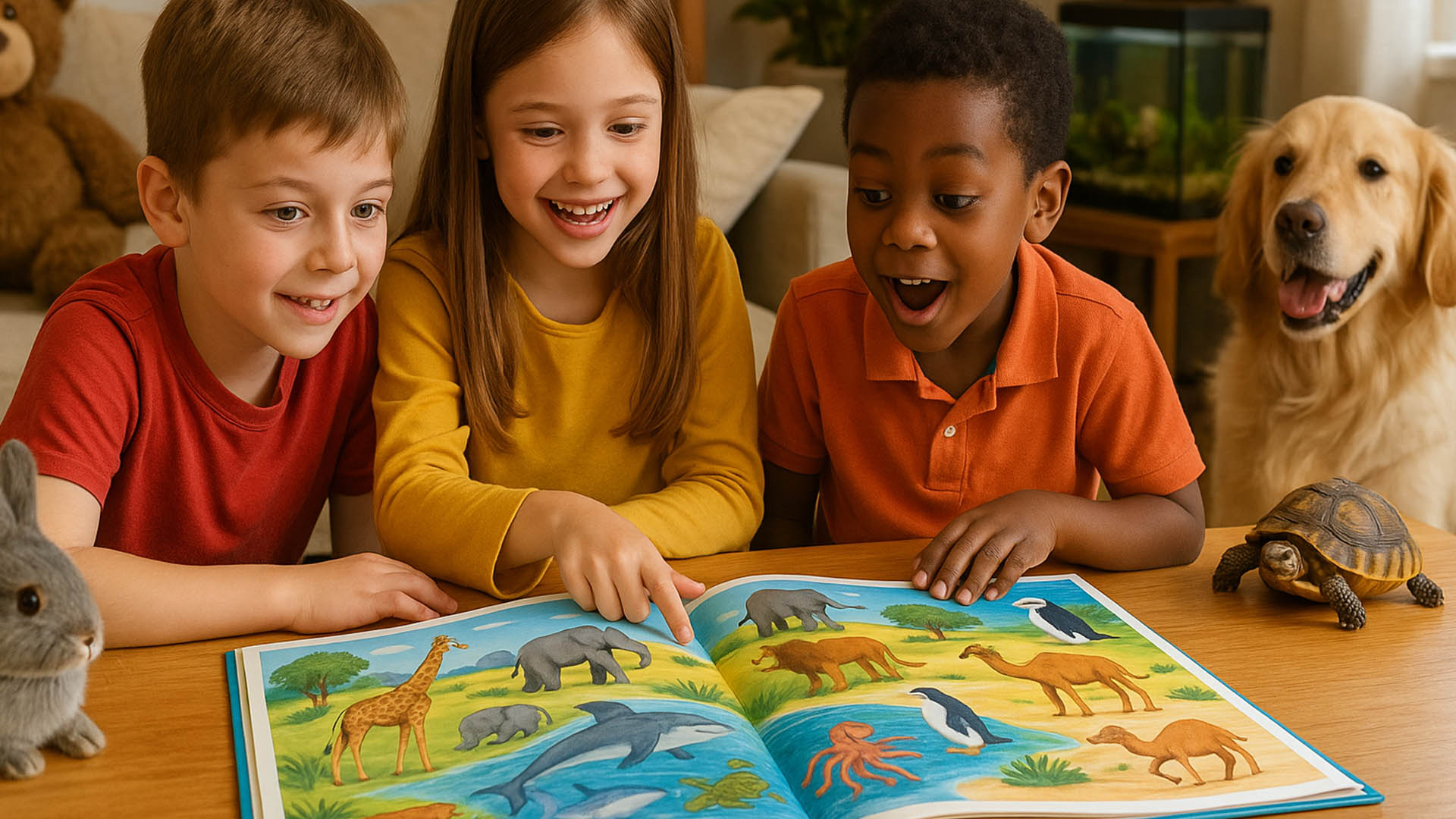

From the tiniest insects to the biggest whales, our planet is home to an incredible variety of animals! Each one is unique and fascinating, with special ways of living, moving, and communicating.
Have you ever wondered why a giraffe has such a long neck or how a fish breathes underwater? Let's dive into the amazing world of animals and discover some super cool facts, learn about their homes, and understand how we can be kind to them!
Animal Habitats: Where Animals Live
Just like you have a home, animals have special places where they live called habitats. A habitat provides everything an animal needs to survive: food, water, shelter, and space [1]. Different animals live in different habitats around the world:
- Forests: Many animals like bears, deer, squirrels, and owls call forests their home. Forests provide plenty of trees for shelter and food.
- Oceans: Whales, dolphins, sharks, and countless types of fish live in the vast oceans. Their habitat is full of water and marine plants.
- Deserts: Animals like camels, fennec foxes, and certain types of snakes are adapted to live in hot, dry deserts, where water is scarce.
- Grasslands: Zebras, lions, giraffes, and elephants roam the wide-open grasslands, finding food and space to live [2].
- Polar Regions: Polar bears, penguins, and seals thrive in the cold, icy environments of the Arctic and Antarctic.
Fun Animal Facts That Will Amaze You!
Animals are full of surprises! Here are some incredible facts:
- Did you know that an octopus has three hearts? Two pump blood through its gills, and one circulates blood to the rest of its body [3]!
- Sharks are older than trees! They have been swimming in our oceans for over 400 million years, while trees have only been around for about 350 million years [3].
- A polar bear's hair isn't white; it's actually colorless and hollow, which helps them stay warm [4].
- Butterflies taste with their feet! They use special sensors on their legs to find out if a leaf is good to lay eggs on [5].
- Male seahorses are the ones who carry the babies! The female deposits her eggs into a pouch on the male, and he carries them until they hatch [3].
How to Care for Animals and Be a Responsible Friend
Whether they are pets or wild animals, it's important to treat all creatures with kindness and respect. Here's how you can be a great friend to animals:
1. Respect Their Space
When you see wild animals, it's best to observe them from a distance. Don't try to touch them or feed them, as it can be dangerous for both you and the animal. Remember, their habitat is their home [6].
2. Be Kind to Pets
If you have a pet, remember they rely on you for everything! Make sure they have fresh water, healthy food, a safe and clean place to live, and plenty of exercise and love. Regular visits to the veterinarian (animal doctor) are also very important to keep them healthy [7]. Always be gentle and quiet around pets, and never chase or scare them [8].
3. Keep Our Planet Clean
One of the best ways to help all animals is to keep their habitats clean. Don't litter, and participate in clean-up activities in your local parks or beaches. Recycling and reducing waste helps protect animal homes from pollution [9].
Q&A: Your Animal Questions Answered!
Q1: What is an animal habitat?
A1: An animal habitat is the natural home or environment of an animal, where it finds everything it needs to live, like food, water, shelter, and space.
Q2: Why shouldn't I feed wild animals?
A2: Feeding wild animals can make them sick, change their natural behaviors, and make them too reliant on humans for food. It's best to let them find their own food in their natural environment.
Q3: What are some basic things a pet needs?
A3: Pets need fresh water, nutritious food, a clean and safe place to live, regular exercise, and lots of love and attention. They also need to visit the vet for check-ups.
Sources
[1] San Diego Zoo Wildlife Explorers Corner. Episode 2: Animal Habitats. https://sdzwildlifeexplorers.org/videos/wildlife-explorers-corner-episode-2-animal-habitats
[2] FirstCry Intelli. Animal Habitats For Kids - Types And Activities. https://www.firstcry.com/intelli/articles/animal-habitats-for-kids-types-and-activities/
[3] SplashLearn. 60 Fun Animal Facts for Kids. https://www.splashlearn.com/blog/funny-animal-facts-for-kids/
[4] Lonely Planet. 26 amazing animal facts for kids. https://www.lonelyplanet.com/articles/amazing-animal-facts-for-kids
[5] Hooray Heroes. 30 fun facts about animals. https://hoorayheroes.com/30-fun-facts-about-animals
[6] SPCA Kids Education. Animal Care. https://kids.spcaeducation.org.nz/animal-care/
[7] The Animal Medical Center. Children's Resources: How to Take Care of a Pet. https://www.amcny.org/wp-content/uploads/2020/04/How-to-Take-Care-of-a-Pet-FINAL.pdf
[8] Spay Neuter Net. Pet Care & Safety Tips for Kids. https://spayneuternet.org/pet-care-safety-tips-for-kids/
[9] National Geographic Kids. Green Tips. https://kids.nationalgeographic.com/science/article/green-tips



0 Comments