



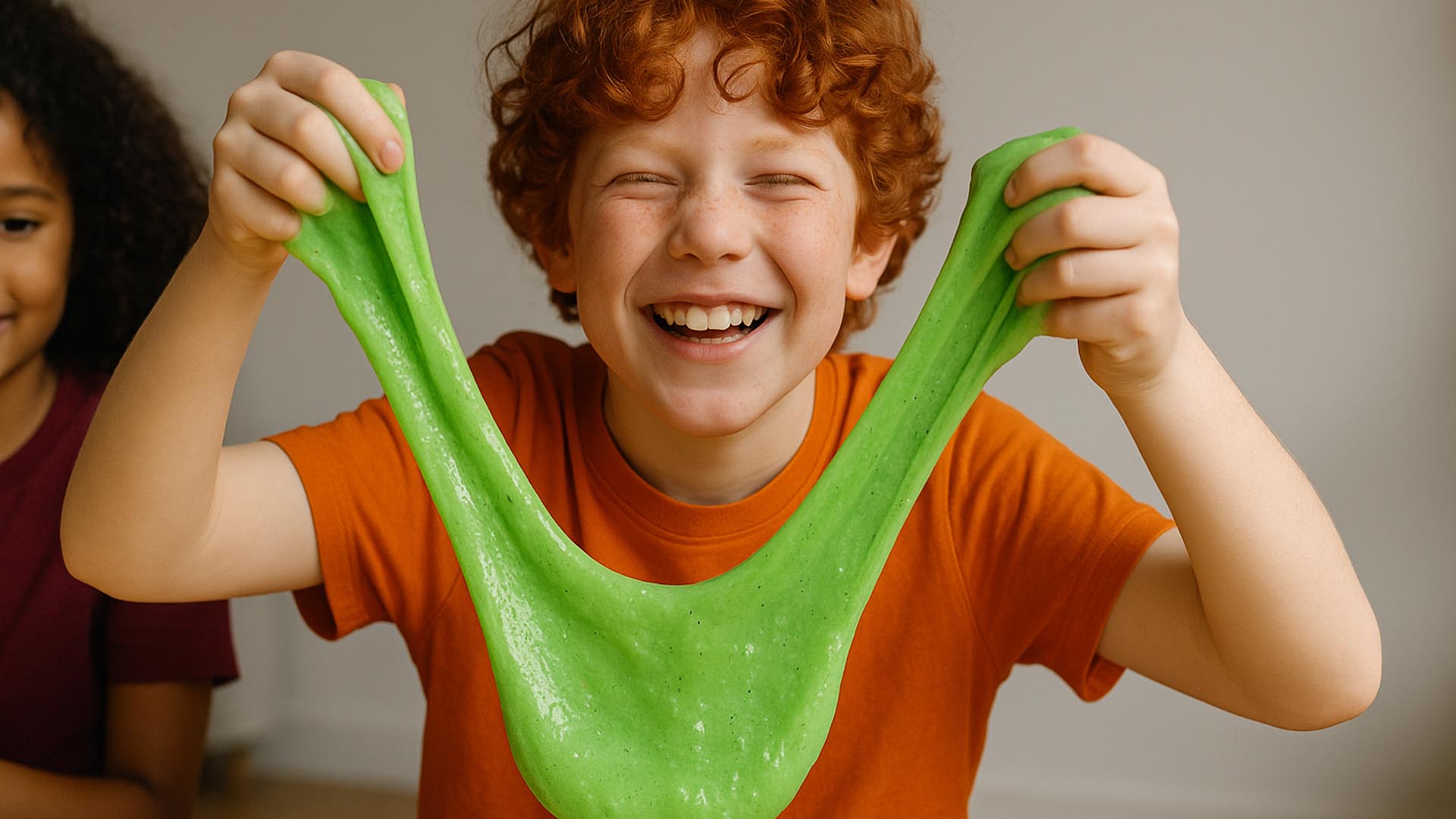

Slime! It's squishy, stretchy, gooey, and one of the most popular toys around. But did you know that every time you play with slime, you are actually doing a cool chemistry experiment? Slime is a fantastic way to learn about the science of polymers and non-Newtonian fluids.
Let's dive into the secret science that makes this amazing substance possible. Get ready to get your hands a little messy—in the name of science!
What is Slime, Really? The Magic of Polymers
The main ingredient in most slime recipes is glue. Glue contains something called a polymer. Imagine a polymer as a giant, long chain made up of many tiny, identical links. These chains are what make the glue sticky and liquid.
How the Chains Connect
When you add a special ingredient, often called an "activator" (like borax solution, liquid starch, or contact lens solution with baking soda), something amazing happens. The activator acts like a tiny set of hands that grabs the long polymer chains and links them together.
"The activator creates new chemical bonds, turning the individual, flowing chains of liquid glue into a giant, tangled, stretchy network—that's your slime!"
This process is called cross-linking. The chains are no longer free to slide past each other easily, which is why the mixture suddenly becomes thick, stretchy, and holds its shape.
Is Slime a Solid or a Liquid?
Slime is one of the most confusing substances in the world! If you pour it slowly, it flows like a liquid. But if you punch it or squeeze it quickly, it feels hard, like a solid.
Introducing Non-Newtonian Fluids
Scientists have a special name for substances that act like this: non-Newtonian fluids. Most liquids, like water, have a constant thickness (or viscosity). Slime's thickness changes depending on how much force you put on it.
•Slow force (like pouring): The polymer chains have time to slide past each other, and the slime flows like a liquid.
•Fast force (like punching): The chains get tangled up instantly, resisting the force and making the slime feel like a solid.
You can see this science in action with other non-Newtonian fluids, like a mixture of cornstarch and water, which is sometimes called oobleck.
Safe Slime Recipe: Make Your Own Polymer!
Here is a simple, safe recipe to make your own slime at home. Always make sure a grown-up is helping you!
What You Will Need
| Ingredient | Purpose |
| 1/2 cup PVA Glue (like Elmer's) | The source of the polymer chains |
| 1/2 cup Water | To thin the glue slightly |
| 1/2 teaspoon Baking Soda | Helps the activator work better |
| 1 tablespoon Contact Lens Solution | The activator that links the chains |
| Food Coloring or Glitter (Optional) | For fun and color! |
Step-by-Step Instructions
1.Mix the Base: In a bowl, mix the glue and water until they are completely combined.
2.Add Baking Soda: Stir in the baking soda until it is fully dissolved. This is a very important step!
3.Add Color: If you want colored slime, add a few drops of food coloring now and mix well.
4.Activate! Add the contact lens solution. Stir quickly. You will see the mixture start to pull away from the sides of the bowl almost immediately.
5.Knead: Once it's too thick to stir, take it out and knead it with your hands. It will be sticky at first, but keep kneading until it becomes smooth and stretchy.
Pro Tip: If your slime is too sticky, add a tiny bit more contact lens solution. If it's too stiff, add a tiny bit more water.
Q&A for Slime Scientists
Q: Why do I need to use contact lens solution and baking soda?
A: The baking soda helps the contact lens solution (which contains a chemical called boric acid) react with the glue. Together, they create the cross-links that turn the liquid glue into stretchy slime.
Q: Is all slime safe?
A: Most homemade slimes are safe when made with a grown-up's help. Never eat slime or put it near your eyes. Always wash your hands thoroughly after playing with it.
Q: What is a polymer in simple words?
A: A polymer is a very long chain made up of many small, repeating building blocks. Think of a long string of paper clips linked together!
Q: Can I use different types of glue?
A: You must use a glue that contains the PVA polymer (polyvinyl acetate) for this recipe to work. Other glues, like wood glue, won't make slime.
Sources
•Scientific American: The Chemistry of Slime
•American Chemical Society: Slime Science
•Exploratorium: Oobleck and Non-Newtonian Fluids
•Credible Source on Polymer Science for Kids (e.g., educational non-profit)



0 Comments