



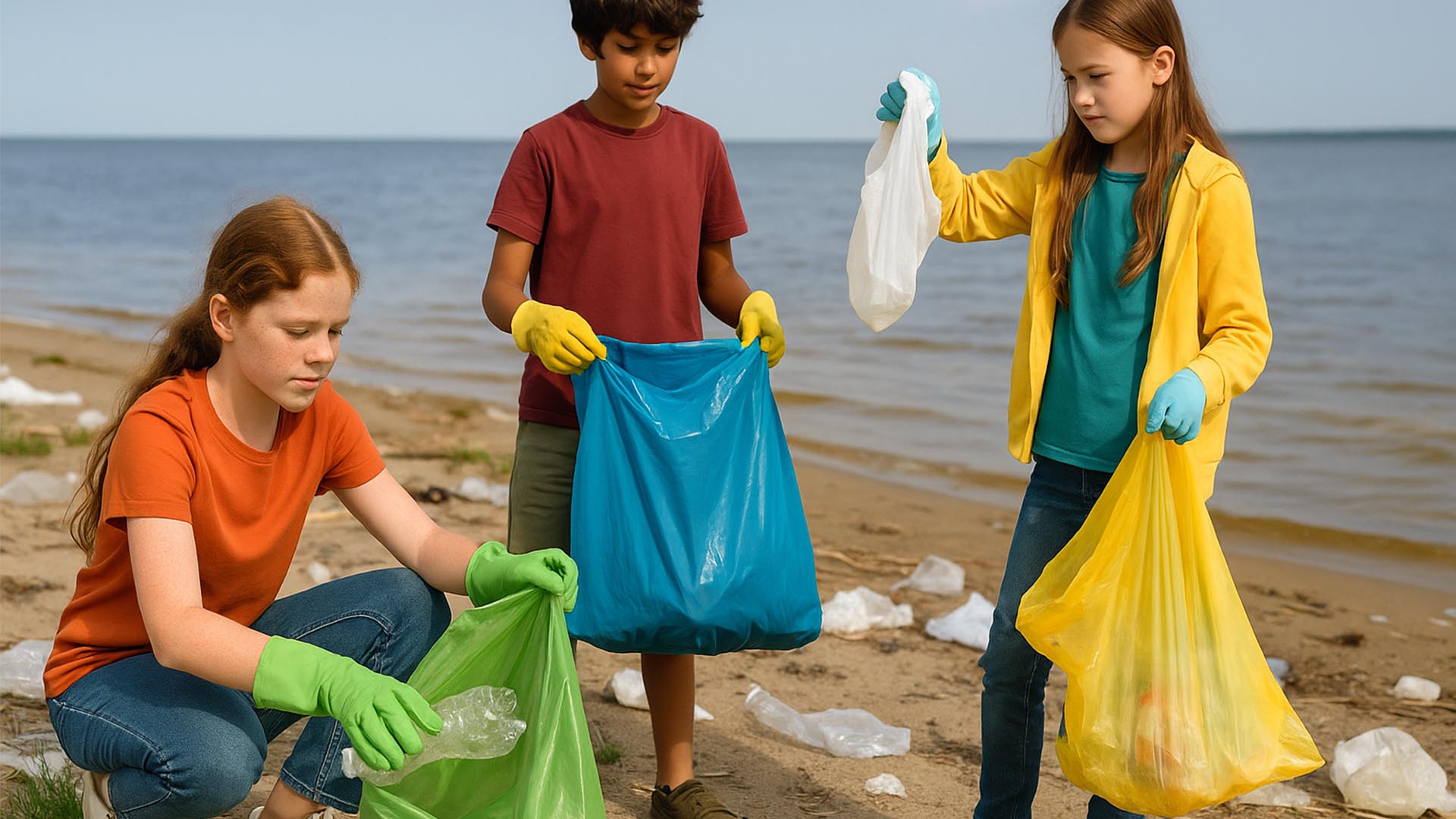
Imagine a world where the oceans are sparkling clean and the animals are safe. That world is possible, but we need your help! Plastic is an amazing material, but when we use it only once and throw it away (like a plastic straw or a water bottle), it can become plastic pollution 1. This pollution can harm our beautiful planet, especially the ocean and the animals that live there.
Ready to accept the Plastic Super-Hero Challenge? Here are five simple super-powers you can use every day to make a big difference.
Super-Power 1: Refuse! (The Power of Saying No)
The best way to fight plastic pollution is to stop it before it even starts. This is the power of Refuse.
•Refuse a plastic straw when you order a drink.
•Refuse a plastic bag at the store—bring your own cloth bag instead!
•Refuse a plastic water bottle—carry a reusable one.
Every time you say "No, thank you" to a single-use plastic item, you are stopping a piece of trash from entering the environment.
Super-Power 2: Reduce! (Use Less)
Look around your house and think about what you use. Can you use less? This is the power of Reduce.
•Instead of buying a new pencil case, reduce waste by fixing the old one.
•Instead of buying a new toy, ask for a used one or borrow one from a friend.
•Reduce the amount of food waste by only taking what you can eat.
Super-Power 3: Reuse! (Give Plastic a Second Life)
Don't throw it away! Can you use that plastic container again? This is the power of Reuse.
•Turn a plastic milk jug into a watering can.
•Use old plastic containers to store crayons or small toys.
•Use glass jars for snacks instead of plastic bags.
The Plastic Pollution Coalition encourages us to find creative ways to reuse items:
"A collection of resources designed for students and educators to reduce the plastic in their lives at home, at school, in their communities, and beyond." 2
Super-Power 4: Recycle! (The Right Way)
Recycling is great, but it’s the last step. It means taking used plastic and turning it into something new. This is the power of Recycle.
•Learn your numbers: Look for the little triangle symbol with a number inside. Different numbers mean different types of plastic.
•Keep it clean: Always wash out plastic containers before recycling them. Dirty plastic can ruin the whole batch!
•Ask a grown-up: Recycling rules are different everywhere, so ask your parents what can and cannot be recycled in your town.
Super-Power 5: Be an Educator! (Share Your Knowledge)
The final super-power is sharing what you know. Talk to your friends, your family, and even your teachers about the Plastic Super-Hero Challenge.
•Organize a cleanup day at your local park or beach.
•Make a poster to remind people to use reusable bags.
•Show your family how easy it is to Refuse plastic straws.
By using these five super-powers, you are not just a kid—you are an Eco-Warrior and a true Plastic Super-Hero!
Q&A: Your Plastic Questions Answered
Q: Does all plastic get recycled? A: Sadly, no. Only certain types of plastic can be recycled, and it depends on where you live. That's why the first three R's (Refuse, Reduce, Reuse) are the most important!
Q: Where does all the plastic go? A: Much of the plastic that isn't recycled ends up in landfills, or worse, in our rivers and oceans. In the ocean, it breaks down into tiny pieces called microplastics, which are very hard to clean up.
Q: How long does it take for plastic to disappear? A: Plastic can take hundreds, or even thousands, of years to break down completely. That means almost every piece of plastic ever made is still somewhere on Earth! That's why we need to be so careful with it.
Sources
[1] The problem with plastic pollution. National Geographic Kids.
[2] Plastic-Free School Resources. Plastic Pollution Coalition.
[3] Top 10 Educational Resources for Plastic Recycling. PolyNext Conference.


0 Comments