



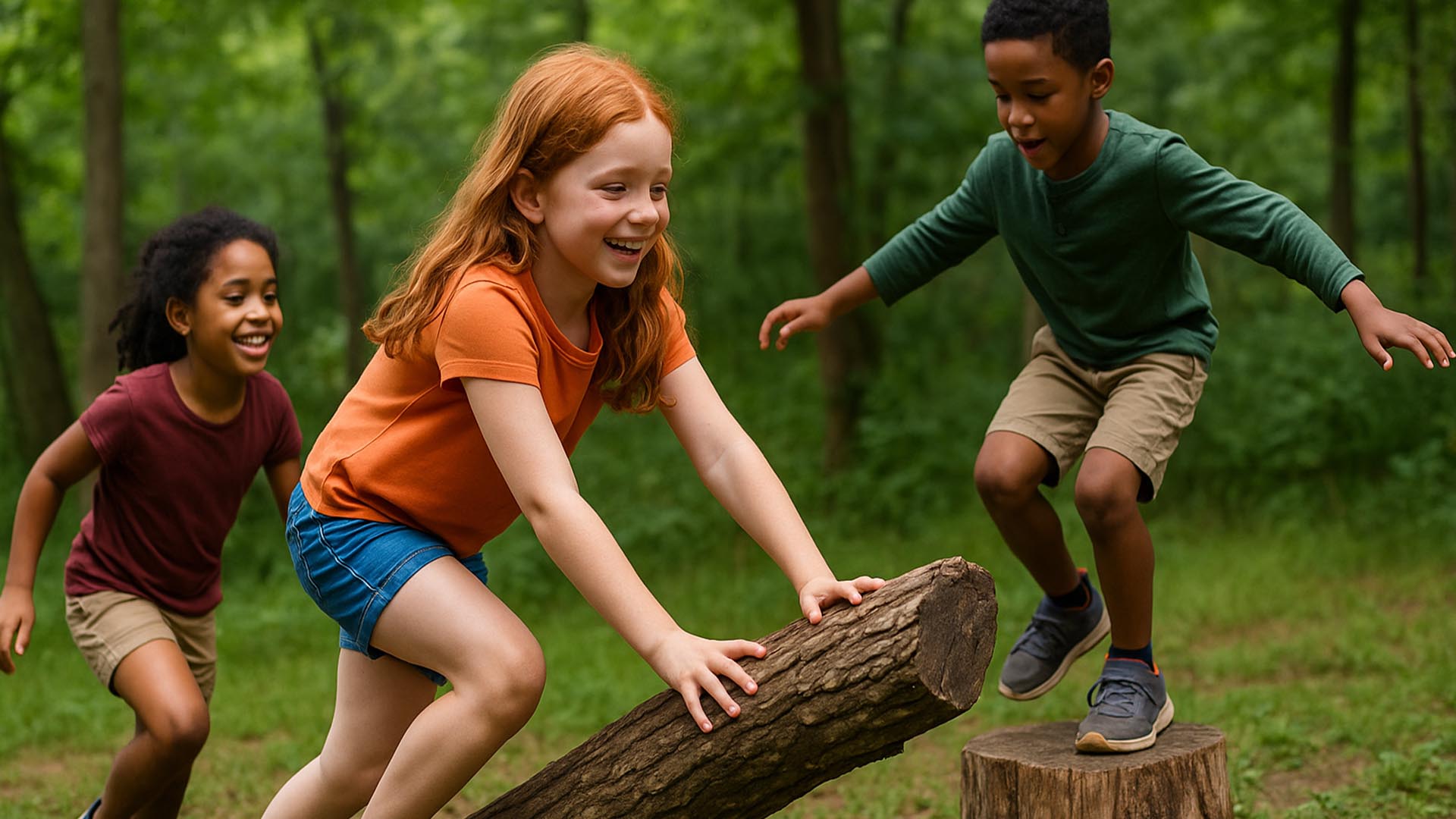
Do you ever feel like you need a break from screens and sitting still? The best place for a brain break is outside! Nature Play is simply playing in nature—running, climbing, digging, and exploring the world around you. It's not just fun; it's essential for your healthy development.
Experts like the National Association for the Education of Young Children (NAEYC) agree that time spent outside leads to better physical and mental health, improved sleep, and big gains in learning 1. Let's discover the nine amazing reasons why the great outdoors is your brain's best friend.
Nature Play is a Super-Boost for Your Body and Mind
Playing outside is a full-body, full-brain workout! Here are some of the incredible benefits:
•Science Lab in Your Backyard: Nature is the ultimate science classroom. When you watch a robin look for a worm, or see how a puddle dries up, you are making observations, predicting, and learning in the moment. This hands-on experience is much more powerful than reading about it in a book.
•Building a Strong Body: Running, jumping, and climbing on a playground or a tree stump builds your gross motor skills and helps you develop a habit of being active. The American Academy of Pediatrics even gives a "prescription for play" at every well-child visit!
•The Best Brain Break: Research shows that after spending time outside, kids are more attentive and productive when they return to other activities 1. Nature is a great way to reduce stress and give your brain a chance to recharge.
•Learning to Be a Good Friend: When you build a fort with sticks or make mud pies with a friend, you are practicing important social skills like sharing, cooperating, and solving problems together.
The Power of Taking Safe Risks
Nature play gives you a chance to challenge yourself in a safe way. When you try to climb a little higher or jump a little farther, you are learning about your own limits and building confidence. This is called taking appropriate risks, and it's a key part of growing up.
"Playing outside provides opportunities to run faster, climb higher, jump farther, and more—all under the watchful eye of a caring adult." 1
By testing your boundaries, you learn to trust your body and your judgment, which helps you become a brave and independent person.
Fun Nature Play Ideas for Your Next Adventure
You don't need fancy equipment to enjoy nature play. Here are some simple ideas:
1.Go on a Nature Scavenger Hunt: Look for things like a smooth rock, a curly leaf, a feather, or something red.
2.Build a Fairy House or a Stick Fort: Use natural materials like twigs, leaves, and moss to create a tiny home for imaginary creatures. This is a great way to practice STEM skills (Science, Technology, Engineering, and Math).
3.Make Mud Pies: Get messy! Mixing dirt and water is a fun sensory experience and a great way to practice creativity.
Q&A: Quick Questions About Nature Play
Q: What is a "gross motor skill"? A: Gross motor skills are the movements that use the large muscles in your body, like running, jumping, throwing, and climbing. Nature play is one of the best ways to practice them!
Q: What is "Nature Deficit Disorder"? A: This is a term used to describe the idea that children who spend too little time in nature may have more difficulties with concentration, mental health, and using their senses 2. Getting outside is the best cure!
Q: Does nature play help me sleep better? A: Yes! Studies show that children who play outdoors sleep better at night. This is likely because of the physical activity and the exposure to natural light 1.
Sources
[2] ASLA (American Society of Landscape Architects). Children: Nature Deficit Disorder.



0 Comments