



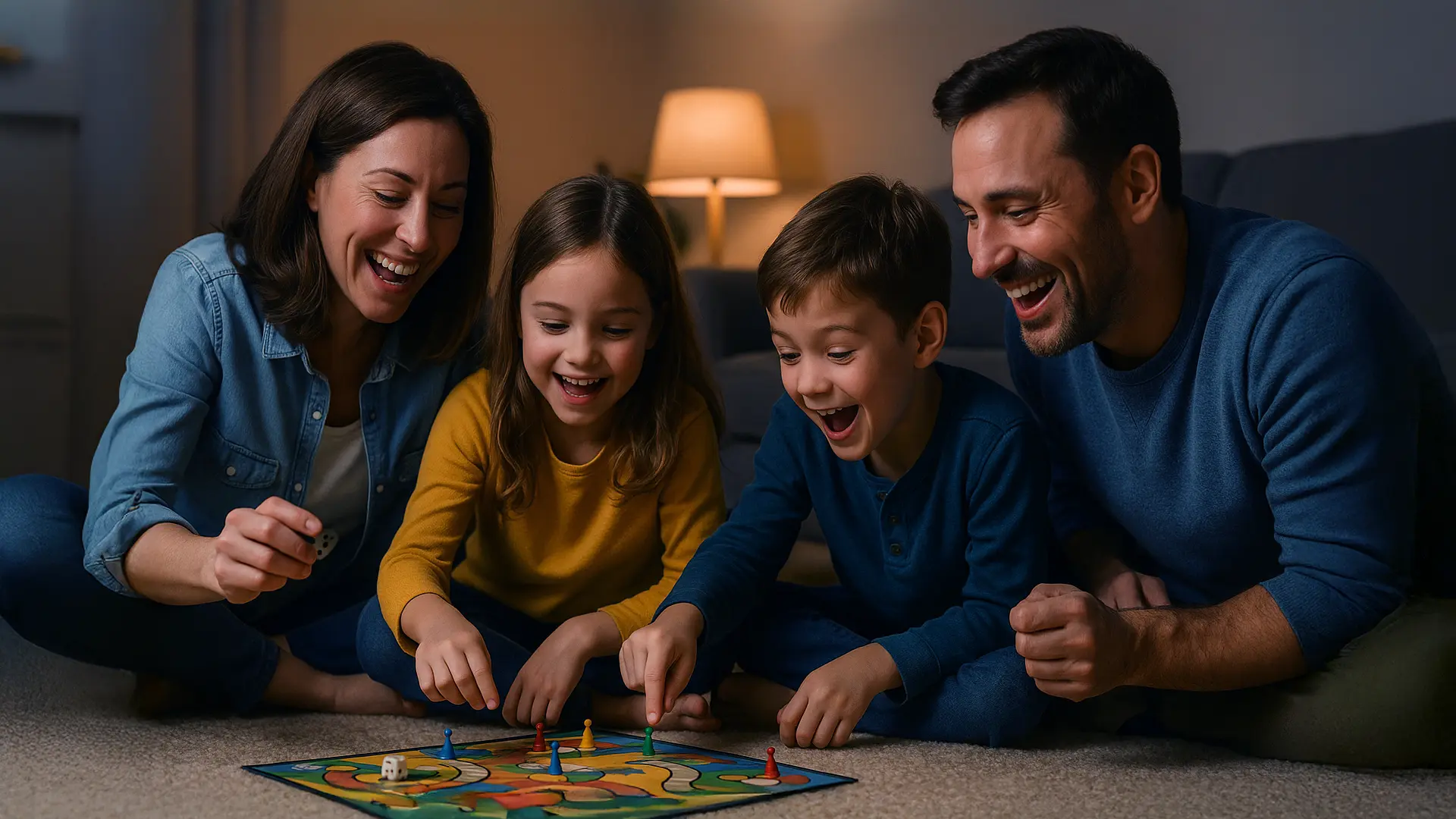
Rolling dice, flipping cards, and laughing around a game board—board games aren’t just a way to pass the time. For kids, they’re actually powerful tools for learning, growth, and connection.
Whether it’s Candy Land or Connect Four, these games offer so much more than entertainment.
In today’s digital world, board games bring families together and build skills that screens often can’t. Let’s explore the real reasons board games are so good for kids—and why you might want to bring them out more often.
1. Board Games Build Critical Thinking Skills
Every time your child plans a move, thinks ahead, or solves a puzzle, they’re exercising their brain. According to Harvard’s Graduate School of Education, board games teach kids to:
- Think logically
- Use strategy
- Recognize patterns
- Focus and pay attention
Games like Chess, Checkers, and Rush Hour challenge the brain in ways that directly support academic success.
2. They Improve Emotional Regulation
Not every game ends in a win—and that’s a good thing. Losing gracefully, waiting for your turn, and managing excitement are all key parts of emotional development.
Board games help children:
- Learn patience
- Handle frustration
- Practice empathy
- Regulate emotional highs and lows
These skills are just as important as math or reading.
3. Social Skills Get a Huge Boost
Board games create opportunities to talk, listen, cooperate, and even negotiate. According to the American Academy of Pediatrics, play with rules (like in board games) strengthens:
- Communication
- Teamwork
- Conflict resolution
- Turn-taking and fairness
Whether it’s siblings or classmates, these social experiences help kids build better relationships.
4. They Support Academic Learning (Without Feeling Like School)
Many board games sneak in learning without kids even realizing it. Some popular examples:
- Math: Monopoly Jr., Sum Swamp, Uno
- Reading: Zingo, Scrabble Junior, Sight Word Bingo
- Science: Outfoxed!, The Magic School Bus Game
Games like these can reinforce school subjects while keeping kids engaged and motivated.
5. They Encourage Focus and Follow-Through
Most board games require kids to pay attention, remember rules, and stick with an activity to the end. That builds:
- Longer attention spans
- Better working memory
- Perseverance and follow-through
Even younger kids benefit from staying focused during a 15–30 minute game.
6. They Bring Families Closer
Playing games together is a powerful way to bond. It creates shared laughter, conversation, and quality time—without screens. In fact, studies show that regular family game nights:
- Increase parent-child connection
- Reduce family stress
- Boost kids’ sense of safety and belonging
And when kids feel connected, they’re more confident in every area of life.
How to Choose the Right Games by Age
Here are some great choices by age group:
- Ages 3–5: Candy Land, Snail’s Pace Race, Zingo
- Ages 6–8: Uno, Guess Who?, Outfoxed!
- Ages 9–12: Ticket to Ride, Catan Junior, Blokus
- Whole Family: Clue, Sequence, Apples to Apples
Make sure the game is age-appropriate in terms of rules, pieces, and game time.
Final Thoughts
Board games are more than just old-fashioned fun. They’re powerful learning tools that help kids grow smarter, kinder, and more connected to the people around them. Best of all? Kids don’t even realize they’re learning—they’re just having a blast.
So next time you're looking for an after-school activity or a weekend plan, skip the screen and reach for the game shelf. Your child’s brain (and heart) will thank you.



0 Comments