



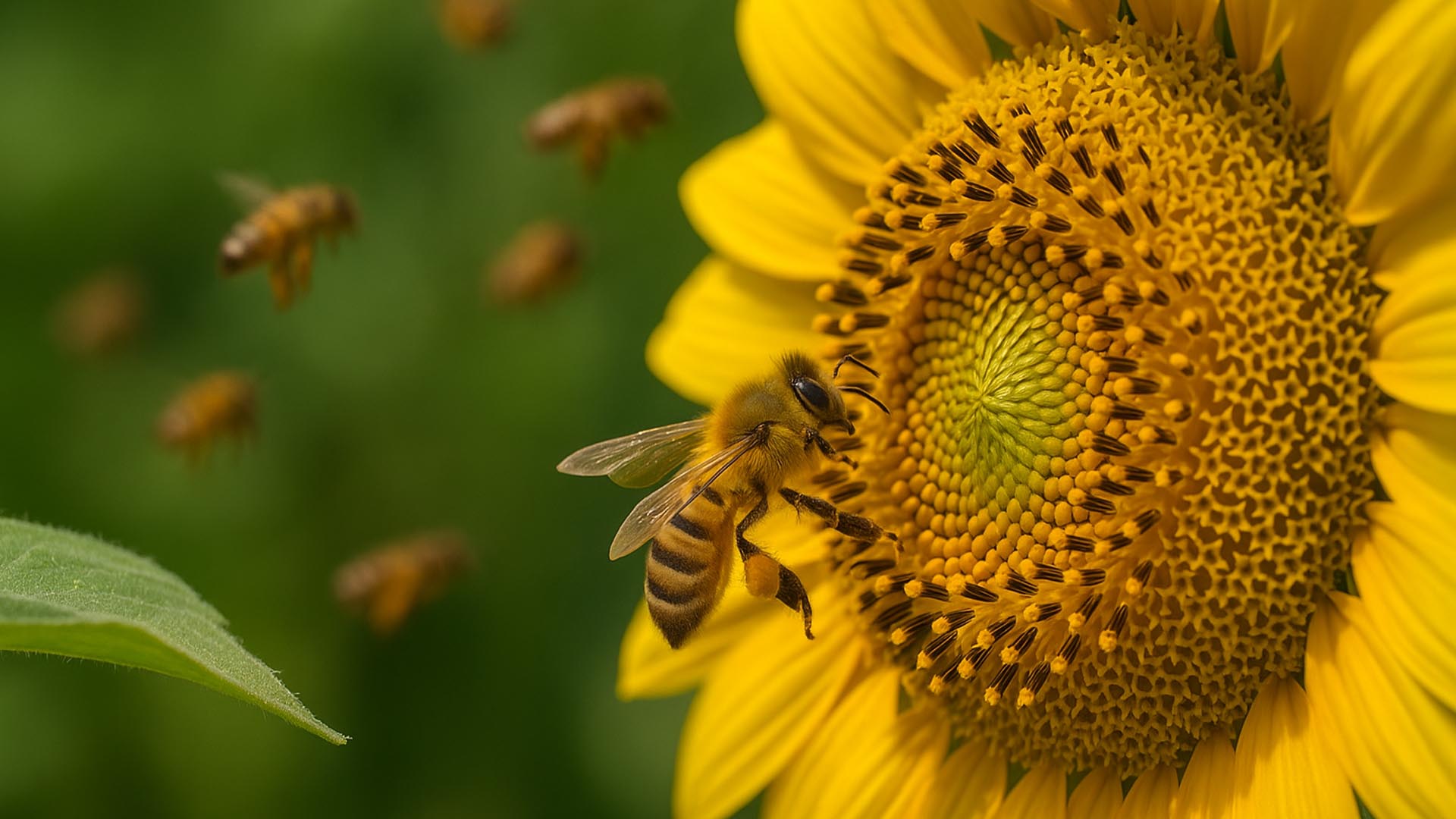
Have you ever seen a busy bee buzzing around a flower? It might look like it's just playing, but that little insect is doing one of the most important jobs on our planet! Bees are not just about honey; they are tiny superheroes that help our world grow and stay healthy. In this article, we will buzz through the amazing life of a bee and discover why they are so crucial to us 1.
The Amazing Job of Pollination
What is Pollination?
Pollination is like a secret handshake between a flower and a bee. When a bee lands on a flower to drink its sweet nectar, tiny yellow dust called pollen sticks to its fuzzy body. When the bee flies to the next flower, it carries that pollen with it. This movement of pollen helps the flowers make seeds and new plants, including many of the fruits and vegetables we love to eat 2. Without bees, we wouldn't have apples, strawberries, or even chocolate!
How a Bee Hive Works
A bee colony is a very busy and organized city! Most honeybees live in a large group called a colony inside a hive. There are three main types of bees in a hive:
•The Queen Bee: She is the only bee that lays eggs. She is the mother of almost all the other bees in the colony.
•Worker Bees: These are all female bees, and they do all the jobs! They clean the hive, make honey, guard the entrance, and, most importantly, fly out to collect nectar and pollen.
•Drone Bees: These are the male bees. Their only job is to mate with the Queen. They don't even have a stinger!
"A single bee colony can pollinate 300 million flowers a day. They are nature's hardest workers, and their work is vital to our food supply." 3
Making Delicious Honey
Honey is not just a sweet treat; it's the bee's food! Worker bees collect nectar from flowers and bring it back to the hive. Inside the hive, they pass the nectar from bee to bee, which helps to dry it out and turn it into thick, golden honey. They store this honey in little wax compartments called honeycombs to eat during the winter 4.
Q&A: Buzzing Questions Answered
Q: Do all bees make honey? A: No, only honeybees make the kind of honey we eat. There are many types of bees, like bumblebees and solitary bees, and they are great pollinators but don't produce a lot of extra honey for us.
Q: What should I do if a bee is near me? A: The best thing to do is stay calm and still. Bees usually only sting if they feel scared or threatened. If you leave them alone, they will fly away on their own.
Q: Why are bees disappearing? A: Bees are facing a few problems, like losing their homes (habitats) and being affected by certain chemicals used on farms. That's why it's important to plant bee-friendly flowers and protect them!
Sources
[3] Britannica Kids - Bee (https://kids.britannica.com/kids/article/bee/352839 )



0 Comments