



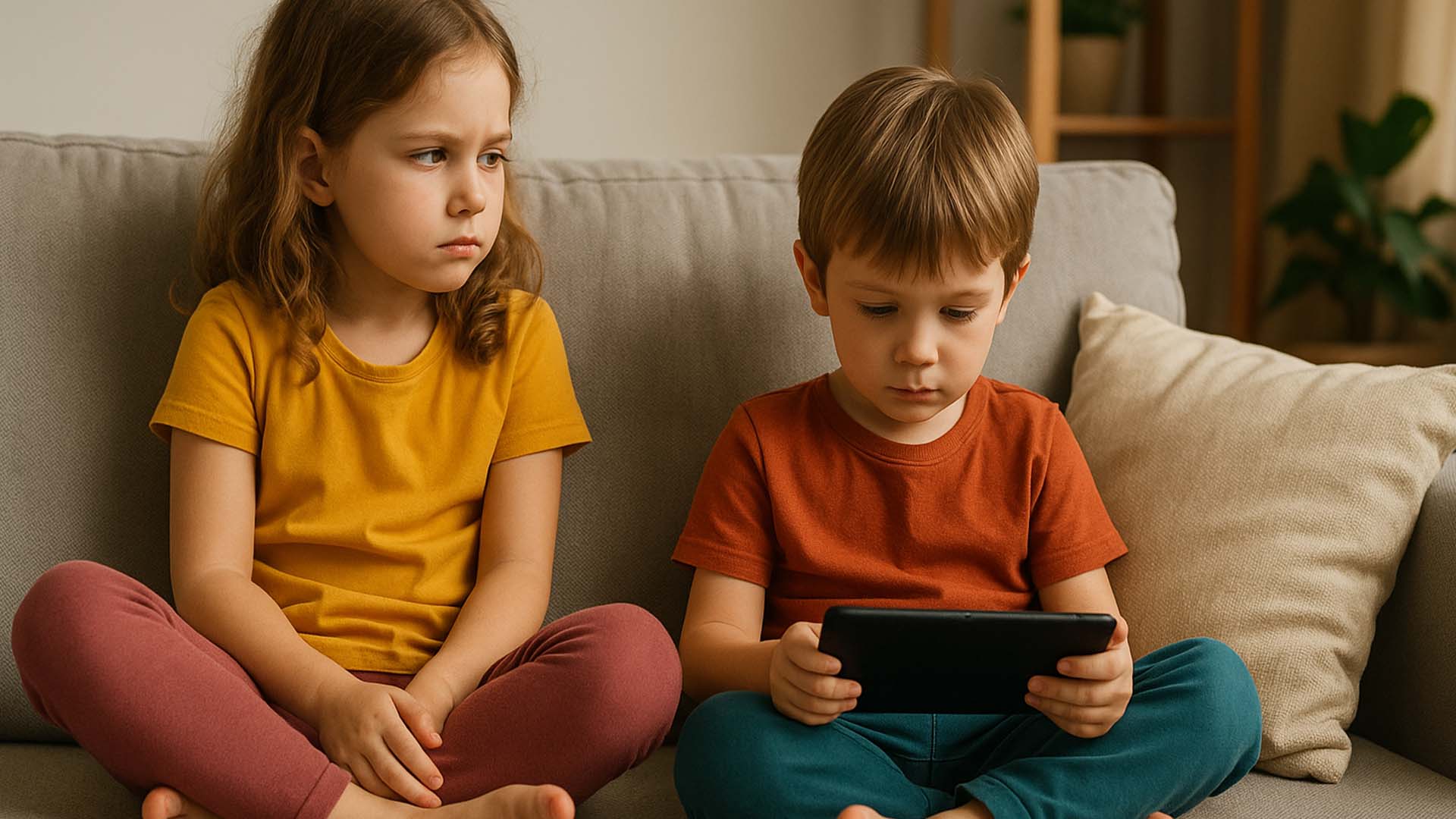

New technologies, such as mobile and interactive screen media, are now ingrained in a young child's daily life. Children today are "digital natives," having been born into an ever-changing digital ecosystem augmented by mobile media.
The age at which kids engage with media on a regular basis has fallen from four years to four months in the present day.
Electronic devices have revolutionized learning, communication, and information dissemination, but recent research indicates that screen media use may have serious adverse effects on children's health over the long term, making this a pressing public health concern.
It has raised the likelihood that children will become obese, experience behavioral problems, sleep irregularities, poor academic performance, etc.
This article delves into the profound effects of excessive screen time on children's cognitive, language, and social-emotional development, while also exploring the crucial strategies and responsibilities that parents and schools can undertake to effectively manage and diminish screen time in young individuals.
Cognitive Development
Screen media use may have both beneficial and detrimental effects on a kid's cognitive results. Media devices with screens have the potential to improve education and learning.
For instance, research has suggested that electronic books and learning-to-read applications may improve young children's early reading skills and creative thinking capacities. However, studies have also demonstrated the negative effects of screen media use on a number of cognitive areas such as executive functioning, sensorimotor development, and academic outcomes.
Media multitasking was found to have a negative impact on executive functioning in teenagers, notably on working memory, inhibition, and the capacity to switch between tasks.
The Quebec Longitudinal Study of Child Development cohort study found a long-lasting connection between early screen media exposure and cognitive abilities, with each one-hour increase in TV exposure at two years of age corresponding to a 7% unit decrease in participation in class and a 6% unit decrease in math proficiency in the fourth grade.
A Spanish research study discovered a negative correlation between the use of screen media and academic achievement, indicating that increased screen time was associated with lower academic performance.
Similarly, a study conducted in the United States found a significant link between higher levels of media multitasking and lower scores on standardized tests measuring academic performance in mathematics and English.
However, adverse executive and academic outcomes may be confounded by the poorer attention and focus from multitasking behaviors rather than solely from screen media overuse, and more research is necessary to tease out this relationship.
Language Development
The early years of childhood are crucial for acquiring language skills and children develop various aspects of language, including vocabulary and phonology.
These skills are acquired through interactions with adults. Numerous studies have highlighted the significance of human interaction, particularly the frequency and quality of exchanges between adults and children, in the development of language skills.
However, there is a growing concern that screen time diminishes the quantity and quality of interactions between children and their parents, resulting in fewer chances for the child to practice and develop their language abilities.
The relationship between screen time and speech and language development is complex, and there are multiple factors that should be taken into account.
The impact of screen viewing is predominantly influenced by contextual factors rather than the sheer amount of time spent watching.
The context encompasses several aspects, such as the behavior exhibited by adult caregivers during screen time, the appropriateness of the content for the child's age, and the level of interactivity provided by the screen. Increasing the amount of screen time at an early age has negative effects on language development.
However, beginning screen time at a later age has some potential benefits.
Videos effects
The characteristics of videos, their content, and co-viewing also play a role in influencing language development. However, other studies have reported negative effects on speech, language, motor skills, cognitive development, and social development.
Adults should be aware of the impact of background television when children are present. Studies have shown that increased exposure to background television can have adverse effects on children's language usage, executive functioning, and cognition in children under the age of five. Excessive television viewing can also potentially affect language development and reading abilities at a young age.
A few studies show a positive correlation between children's screen time when co-viewed with a parent and their expressive lexical, phonological, and overall language abilities. Studies have indicated that compared to children who view screens for ≤1 hour per day, those who watch >1 hour per day have a lower chance of having a normal expressive language.
The American Academy of Pediatrics (AAP) recommends that children aged 18 to 24 months should avoid screen media use other than video chatting.
For children aged 2 to 5 years, screen use should be limited to 1 hour per day of high-quality programming. For children aged 6 years and older, consistent limits should be set on the time spent using media and the types of media.
The AAP also recommends that parents create a Family Media Plan that considers the health, education, and entertainment needs of each child and family member.
Social-Emotional Development
Excessive screen usage can also lead to problems in social-emotional development, including obesity, sleep disturbances, depression, and anxiety. It can obstruct the ability to interpret emotions, fuel aggressive conduct, and harm one's psychological health in general.
Setting boundaries, utilizing parental controls, and demonstrating good screen behavior are all techniques that parents may use to manage children's screen usage. We can reduce the possible negative impacts of excessive screen time and promote children's healthy development and well-being by increasing knowledge and encouraging alternative activities that stimulate development.
Q&A
Q1: What are the main negative impacts of excessive screen time on children?
A1: Excessive screen time can negatively impact cognitive development (executive functioning, academic performance), language development (reduced interaction, delayed speech), and social-emotional development (obesity, sleep disturbances, depression, anxiety, aggressive behavior).
Q2: Are there any benefits to screen time for children?
A2: Yes, screen media can improve education and learning through electronic books and learning-to-read applications. Co-viewing with parents can also positively impact language abilities.
Q3: What are the recommended screen time limits for children?
A3: The American Academy of Pediatrics (AAP) recommends no screen media use other than video chatting for children aged 18 to 24 months.
For children aged 2 to 5 years, screen use should be limited to 1 hour per day of high-quality programming. For children aged 6 years and older, consistent limits should be set on the time spent using media and the types of media.
Q4: What can parents do to manage their children's screen time?
A4: Parents can set boundaries, utilize parental controls, demonstrate good screen behavior, and create a Family Media Plan that considers the health, education, and entertainment needs of each child and family member.
Sources
- Muppalla, S. K., Vuppalapati, S., Pulliahgaru, A. R., & Sreenivasulu, H. (2023). Effects of Excessive Screen Time on Child Development: An Updated Review and Strategies for Management. Cureus, 15(6), e40608. https://pmc.ncbi.nlm.nih.gov/articles/PMC10353947/
- American Academy of Pediatrics. (n.d.). Screen Time Guidelines. HealthyChildren.org. https://www.healthychildren.org/English/family-life/Media/Pages/Where-We-Stand-TV-Viewing-Time.aspx



0 Comments