



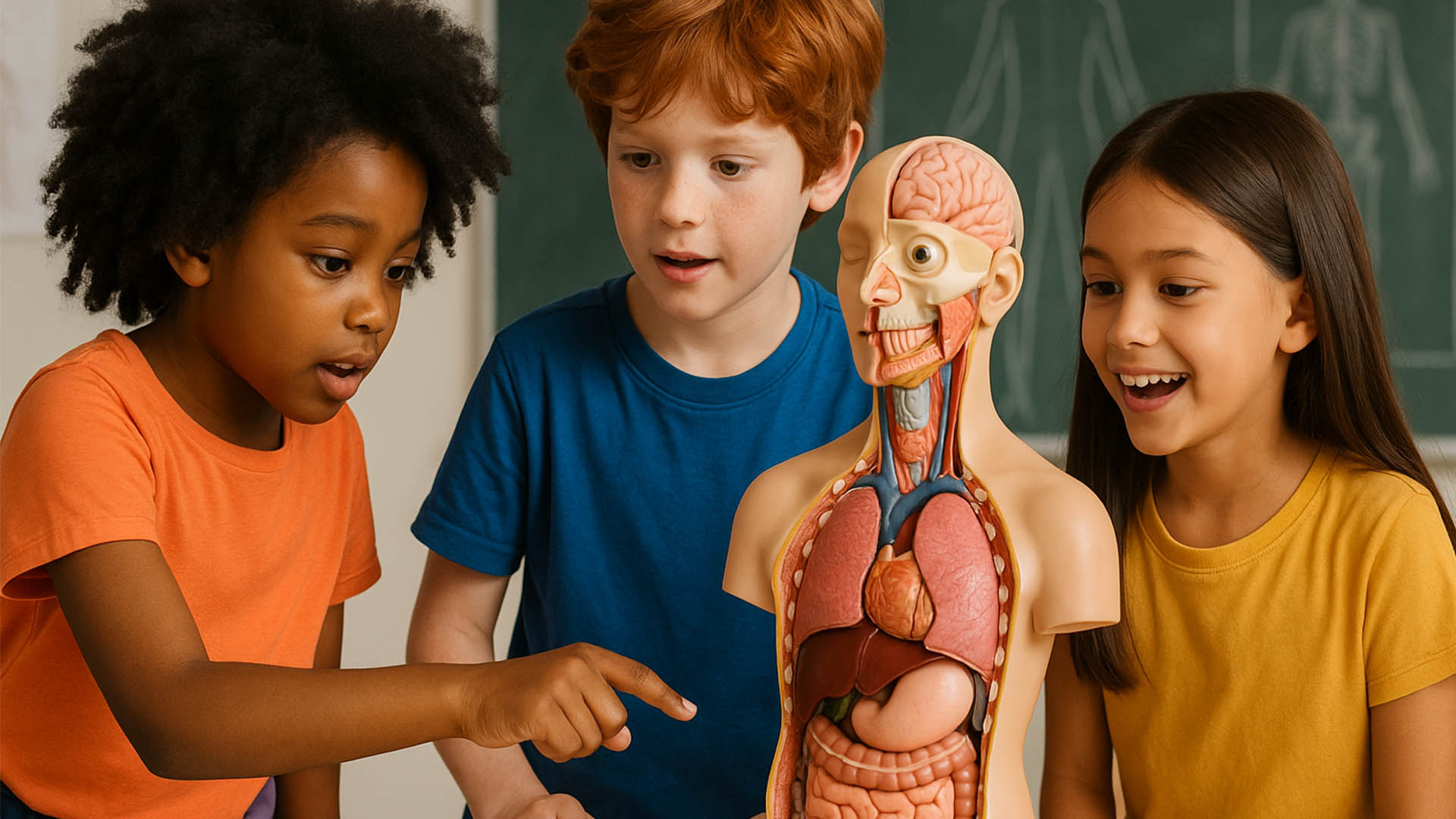
Have you ever stopped to think about how truly incredible your body is? It’s a super-machine, working tirelessly every second of every day, even when you’re sleeping! From running and jumping to thinking and laughing, your body does so many amazing things.
Each part, from your tiny toes to the top of your head, has a special job to do, and they all work together perfectly. This article will take you on an exciting journey inside yourself to discover the wonders of the human body and how you can keep your amazing machine running smoothly!
Meet Your Body: A Super-Machine!
Your body is made up of many different parts, systems, and organs, all designed to help you live, grow, and explore the world. It’s more complex and efficient than any robot or computer ever built! Did you know that your body has around 37.2 trillion tiny building blocks called cells [1]? Each cell plays a role in making you, well, you! Understanding how these parts work together is like learning the secret code of your own personal superhero suit.
The Brain: Your Body's Control Center
Up in your head, protected by your skull, is your brain – the command center of your entire body! Your brain weighs about three pounds and is responsible for everything you think, feel, learn, and remember [2].
It sends messages through your nervous system to every part of your body, telling your muscles when to move, your heart when to beat, and your eyes what they are seeing. It also helps you understand the world through your five senses: sight, sound, smell, taste, and touch.
Keeping your brain active by learning new things and getting enough sleep is super important!
Heart and Lungs: The Power Duo
Feel your chest. Can you feel a steady thump-thump? That’s your heart! Your heart is a powerful muscle that works like a pump, pushing blood all over your body.
This blood carries oxygen and nutrients to all your cells, keeping them healthy and strong [3]. Your heart beats about 100,000 times a day! [2]
Working closely with your heart are your lungs. When you breathe in, your lungs take in oxygen from the air, and when you breathe out, they release carbon dioxide.
Together, your heart and lungs make sure your body gets all the fresh air and energy it needs to run, play, and learn. Regular exercise, like running or playing outside, helps make your heart and lungs even stronger.
Bones and Muscles: Our Body's Framework
What gives your body its shape and allows you to stand up tall? Your bones! You have over 200 bones in your body that form your skeleton, providing support and protecting your delicate organs [4].
But bones can’t move on their own. That’s where your muscles come in! Muscles are attached to your bones and pull on them to create movement. When you run, jump, or even just smile, your muscles are working hard. Eating foods rich in calcium, like milk and cheese, helps keep your bones strong, and being active helps build strong muscles.
Stomach and Intestines: Fueling Our Adventures
When you eat a yummy snack or a healthy meal, where does it go? It starts a journey through your digestive system, beginning with your stomach and then moving to your intestines.
These organs work together to break down your food into tiny pieces, taking out all the nutrients and energy your body needs to grow, play, and think. Eating a variety of healthy foods, especially fruits, vegetables, and whole grains, gives your body the best fuel for all your adventures [5].
"Your body is an amazing machine, and taking care of it is one of the most important jobs you have. Healthy habits like eating well, exercising, and getting enough sleep are key to a strong and happy life." – KidsHealth.org
Q&A: Your Body Questions Answered!
Q: How many bones are in my body?
A: When you were born, you had around 300 bones! But as you grow, some of them fuse together, so by the time you're an adult, you'll have 206 bones [4]. Kids actually have more bones than adults!
Q: Why does my heart beat fast when I run?
A: When you run, your muscles need more oxygen and energy. Your heart works harder and faster to pump more blood, carrying that oxygen and energy to your muscles, so you can keep moving!
Q: What happens to the food I eat?
A: After you chew your food, it travels down to your stomach, where it gets mixed and broken down. Then, it moves into your intestines, where all the good nutrients are absorbed into your blood to power your body. What your body doesn't need leaves as waste.
Q: How can I keep my body healthy?
A: There are three main ways: Eat healthy foods like fruits, vegetables, and whole grains; get plenty of exercise by playing outside or doing sports for at least 60 minutes a day; and get enough sleep so your body can rest and repair itself [5].
Sources:
[1] Hooray Heroes. 30 Fun Facts about Human Body. https://hoorayheroes.com/30-fun-facts-human-body
[2] Daily Skill Building. 50 Fun & Fascinating Human Body Facts for Kids. https://dailyskillbuilding.com/human-body-facts-for-kids/
[3] National Geographic Kids. 15 Facts About The Human Body!. https://www.natgeokids.com/uk/discover/science/general-science/15-facts-about-the-human-body/
[4] SCP. (2023, September 20). The human body: 10 fascinating facts for kids. https://www.scp.co.za/news/the-human-body-10-fascinating-facts-for-kids/
[5] Nemours KidsHealth. How the Body Works (Topic Center) (for Kids). https://kidshealth.org/en/kids/center/htbw-main-page.html



0 Comments