



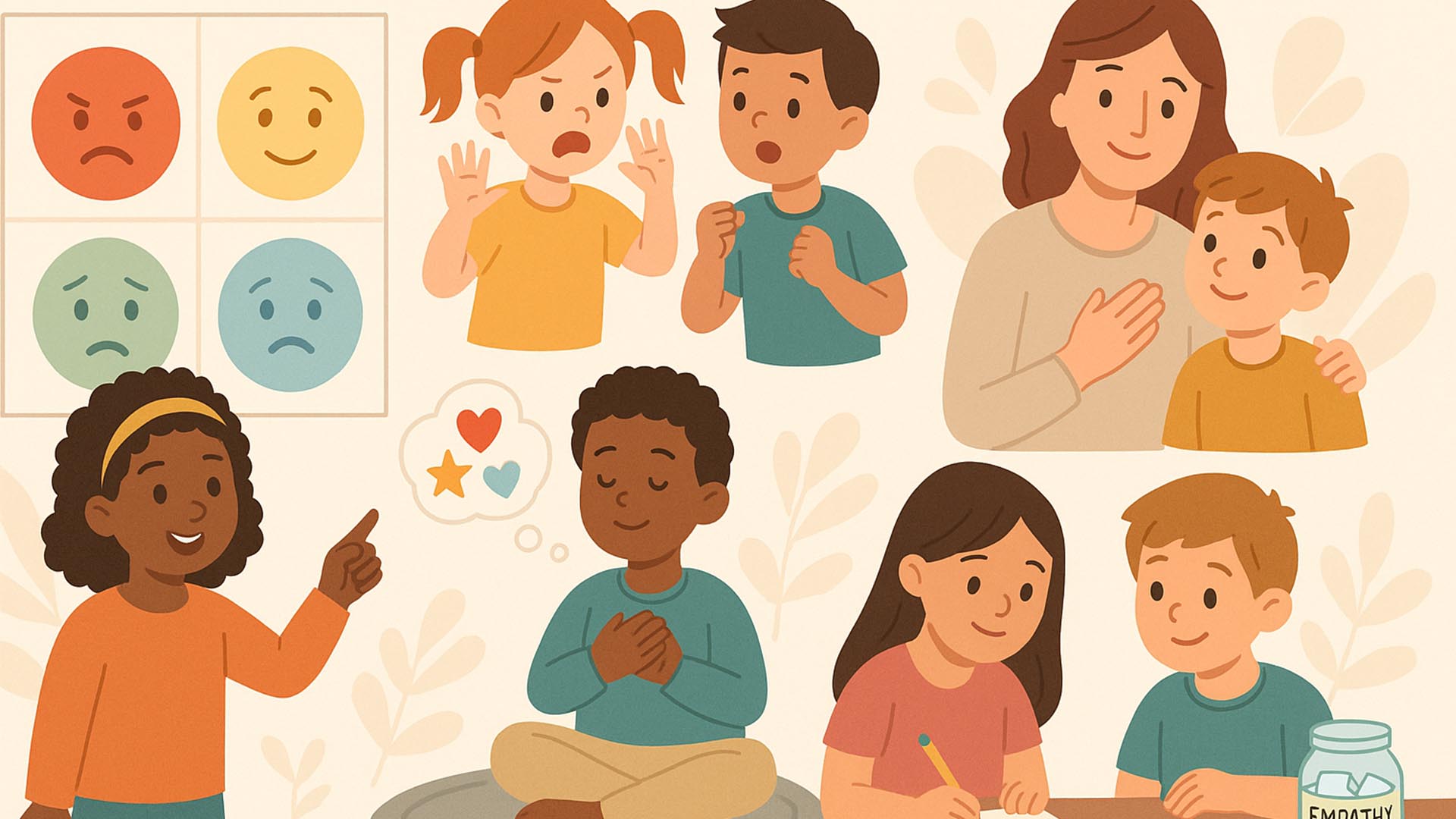

Learning isn’t just math and reading—schools are integrating Social-Emotional Learning (SEL) into daily routines to nurture empathy, self-awareness, and responsible decision-making. Educators emphasize SEL for creating supportive, resilient learners. Families play a critical role by reinforcing these skills at home .
Core SEL Skills
- Self-Awareness: Recognizing feelings.
- Self-Management: Regulating emotions and behaviors.
- Social Awareness: Understanding perspectives.
- Relationship Skills: Communicating and collaborating.
- Responsible Decision-Making: Evaluating consequences ethically.
Home-Based SEL Activities
- Mood Meter: Daily check-ins with colors or words.
- Emotion Charades: Act out feelings and guess them.
- Empathy Jar: Write kind notes and share appreciation.
- Story Reflection: Discuss characters’ emotional choices in books.
- Mindful Minute: Pause for deep breaths or gratitude statements.
Why It Matters
- Better Focus: Regulated kids learn more effectively.
- Healthy Relationships: Empathy builds cooperation at home and school.
- Life Resilience: Kids learn to cope with stress and make thoughtful decisions.
How Parents Can Support
- Model Emotion Honesty: Share feelings—“I’m frustrated, so I’ll take a breath.”
- Reflect on Choices: Discuss outcomes—“Was that fair? How did it feel?”
- Praise Emotional Growth: Celebrate self-control or kind acts.
- Bridge with School: Ask teachers about SEL lessons and repeat at home.
Conclusion
SEL is no longer a soft add-on—it’s a fundamental part of raising well-rounded children. By bringing emotional learning into daily routines, families can build empathy, resilience, and social strength—essential tools for a thriving generation.
Q&A Section
Q1: What SEL activities work for preschoolers?
A1: Use emotion faces, feeling stories, and simple breathing games for little ones.
Q2: How can tweens get involved?
A2: Suggest reflection prompts, empathy journaling, or peer-support discussions.
Sources:
- EduNannies on child development trends educatednannies.com



0 Comments