



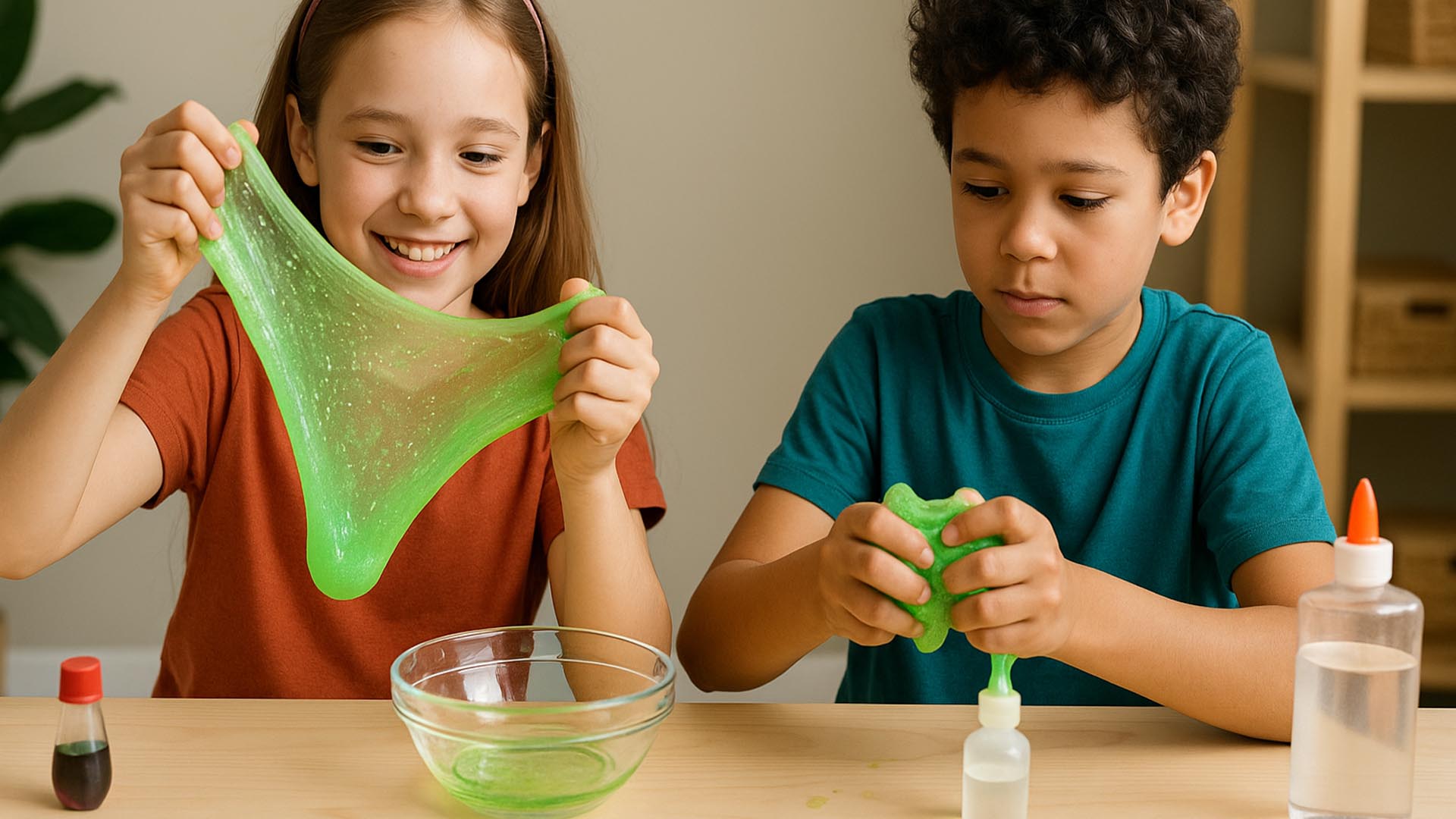

Slime remains a top sensory activity for kids, but many recipes rely on borax or harsh chemicals. An eye-solution slime—using saline contact-lens solution, baking soda, and clear PVA glue—offers a safer, non-toxic alternative that still delivers satisfying stretch and bounce.
Why Use Eye Solution?
- Borate Ions: Saline solutions contain borate, which cross-links glue polymers into slime.
- Safety: Formulated for eyes, it’s rigorously tested and milder than pure borax powder.
- pH Balance: Baking soda buffers acidity, ensuring a smooth, non-irritating slime texture.
Materials Needed
- ½ cup clear PVA school glue
- ¼ teaspoon baking soda
- 1–2 tablespoons saline (eye-solution) with boric acid/borate
- Optional: food coloring or glitter for fun effects
Step-by-Step Recipe
- Pour ½ cup of clear glue into a mixing bowl.
- Stir in ¼ teaspoon of baking soda until fully dissolved.
- Add a few drops of food coloring or a sprinkle of glitter, if desired.
- Slowly mix in 1 tablespoon of saline solution—slime will start to form.
- Knead with hands—if too sticky, add saline solution drop by drop until desired stretchiness is reached.
- Store in an airtight container to keep your slime fresh.
Science Behind the Fun
When you add saline solution, borate ions link PVA glue molecules into a flexible network—turning liquid glue into stretchy, bouncing slime. Baking soda adjusts pH so the reaction proceeds smoothly, avoiding brittle or overly stiff slime.
Tips for Parents
- Adult Supervision: Especially during measuring and kneading for younger children.
- Surface Protection: Craft on plastic mats or trays for easy cleanup.
- Hand Washing: Encourage washing hands before and after play.
- Reuse & Recycle: Store slime in an airtight bag; repurpose leftovers for future batches.
Q&A Section
Q1: Is saline slime safe if it accidentally touches eyes?
A1: Because it’s formulated for eyes, small incidental contact is unlikely to irritate—but rinse immediately with water if it happens.
Q2: Can I use colored glue instead of adding dye?
A2: Yes—colored PVA glue works directly and eliminates the need for food coloring.
Sources:
- Harvard Medical School Eye Solutions FAQ exac.hms.harvard.edu
- Colorado 4-H Chemistry in the Kitchen (non-toxic slime recipe) co4h.colostate.edu



0 Comments