





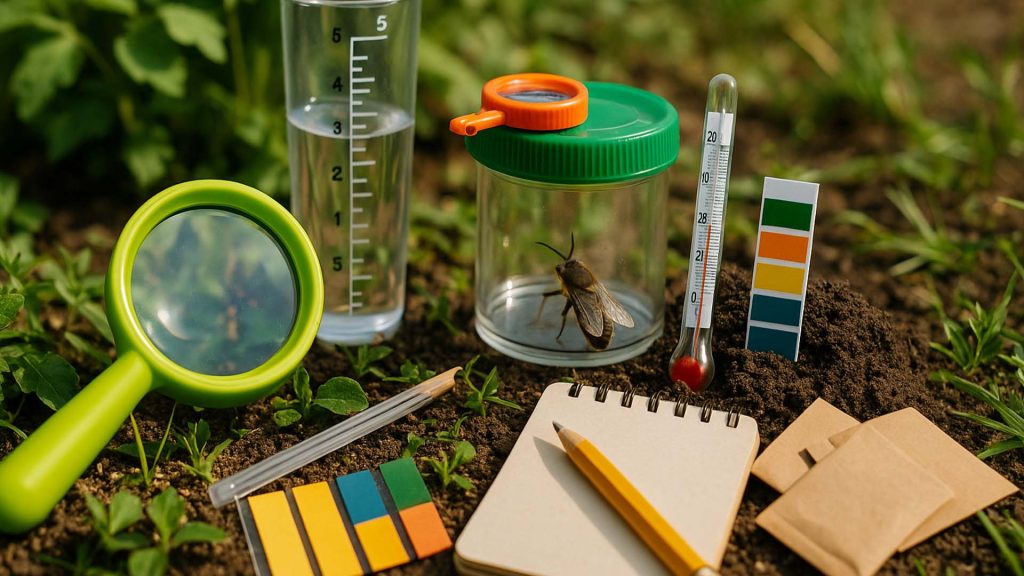
Outdoor sensory STEM kits are booming in popularity. These kits come packed with child-sized tools—magnifying glasses, soil testers, bug collectors, seed packets—and are crafted to guide kids in hands-on discoveries. Whether detecting pH levels in puddles or measuring plant growth, these sets blend science and outdoor exploration into playful learning.
What’s Included
Typical kits contain:
- Magnifying glass and bug jars
- Simple weather instruments (thermometers, rain gauges)
- Soil and water testing strips
- Field notebooks and pencils
- Easy experiments: pH tests, insect safaris, plant mapping
Learning Benefits
- Scientific thinking: Promotes hypothesis-making and observation-based conclusions.
- Sensory engagement: Touch, sight, smell, and even sound are activated in nature.
- Curiosity reinforcement: Outdoor settings encourage discovery and questioning.
- Resilience: Exposure to variable outdoor conditions builds adaptability.
Supporting Research
A 2024 Child Development study revealed children using outdoor STEM kits showed 30% more inquiry-based questions and spent 25% more time observing nature than those with indoor activities.
Choosing the Right Kit
Look for kits that are:
- Durable in outdoor conditions
- Age-appropriate (with clear instructions)
- Balanced between guided experiments and open-ended discovery
- Inclusive of reusable or refillable components
Family Tips
- Plan regular outings: Explore gardens, parks, or backyards weekly.
- Incorporate into chores: For example, test soil before planting veggies.
- Use guides together: Read and record observations with your child.
- Create displays: Use a bulletin board to showcase collected insects, leaf rubbings, or data logs.
Conclusion
Outdoor sensory STEM kits offer wholesome and educational experiences that blend science with nature. As more families embrace hands-on outdoor learning, these kits encourage thoughtful, curious, and resilient children ready for tomorrow’s challenges.
Q&A Section
Q1: What age range works best for these kits?
A1: Most kits target ages 5–10, offering tools and guidance suitable for early scientists to explore nature safely and meaningfully.
Q2: Can the components be reused for longer-term projects?
A2: Yes—many kits include refillable items and booklets meant for ongoing journaling and exploration across seasons.
Sources:
- Child Development journal outdoor STEM study
- EdTech Magazine review of STEM kits 2025
- Smithsonian Magazine on hands-on science education



0 Comments