



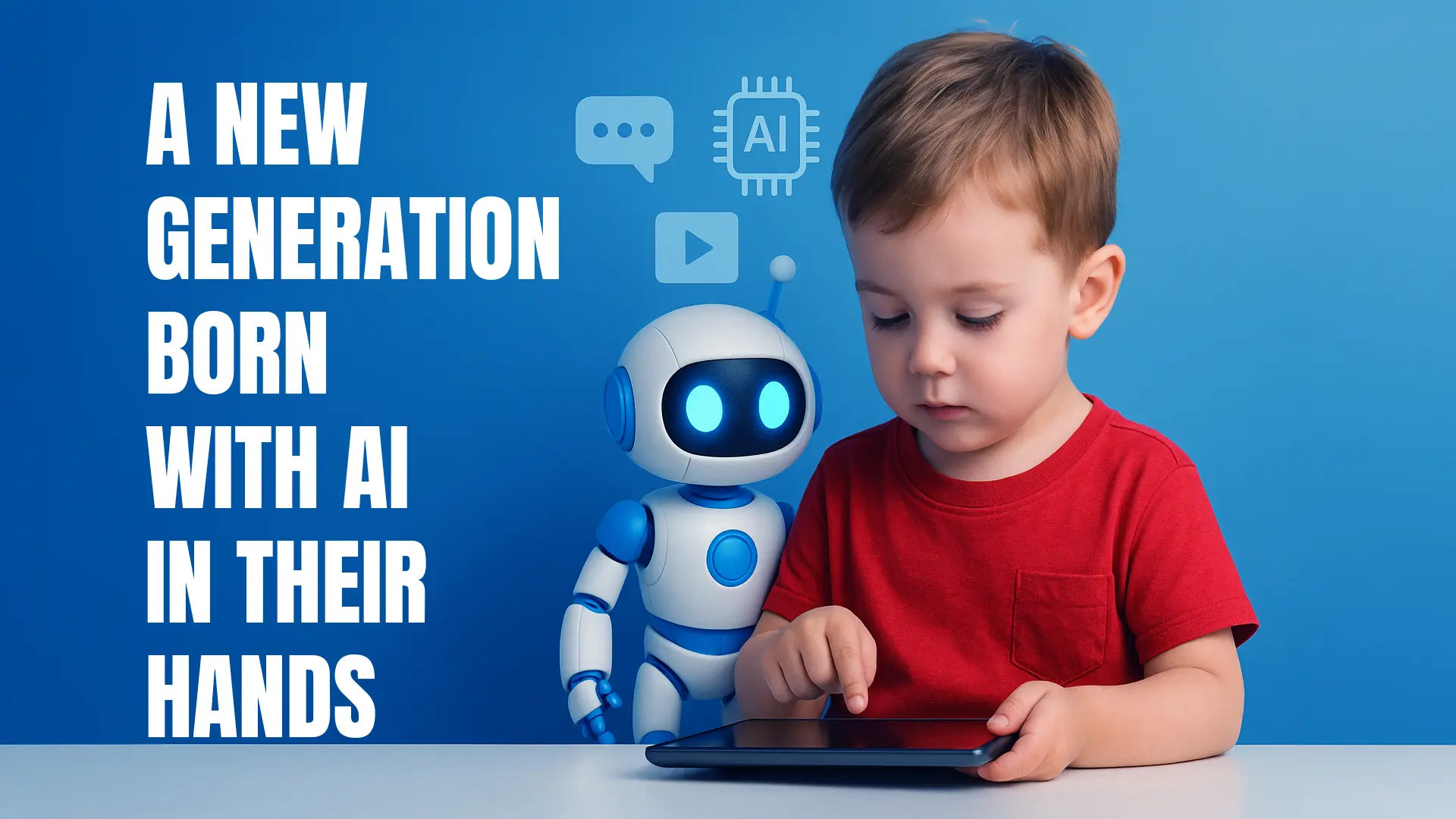
A New Generation Born with AI in Their Hands
Unlike any generation before them, today’s children are growing up surrounded by Artificial Intelligence. Voice assistants, personalized learning apps, smart toys, and even AI-curated videos are part of daily life.
For kids born after 2020, AI is not a futuristic technology — it's simply "the world as it is." Their first words might be answered by a virtual assistant. Their favorite stories might be recommended by algorithms. Their drawings might be completed by smart apps.
But what does research say about this profound shift?
Is AI helping, hurting, or simply changing childhood?
Let's explore what the studies and experts are telling us.
1. AI and Early Learning: A Double-Edged Sword
Research from the UNICEF Global Insight highlights that AI-powered platforms can boost literacy, numeracy, and personalized learning, offering tools for kids in underserved communities. However, without thoughtful use, these tools risk limiting social interaction and creative problem-solving.
Key takeaway: AI can be a fantastic learning partner — but it should complement, not replace real-world exploration and human teaching.
2. Creativity and Expression: Expanded, but Different
Today's kids use AI to compose music, create animations, and design games. According to the MIT Media Lab, AI can expand creative possibilities by making technical skills more accessible.
However, researchers warn about "algorithmic conformity" — the risk that creativity might become shaped by patterns AI systems encourage.
Key takeaway: AI can inspire creativity, but children must be encouraged to embrace imperfection, spontaneity, and originality.
3. Emotional Development in the Age of AI
Emotional growth requires authentic human connection — something no machine can replicate.
Experts emphasize that children interacting heavily with AI may develop blurred boundaries between human empathy and machine responses.
Key takeaway: Emotional intelligence still blooms best through real-world relationships and human interactions.
4. Digital Literacy: The New Essential Skill
Understanding how AI works — and its biases — will be as important as reading and math skills.
Common Sense Media stresses that teaching kids about AI early empowers them to become critical, ethical users and creators of technology.
Key takeaway: Tomorrow’s leaders must not only use AI — they must understand, question, and shape it.
5. Looking Ahead: The World They're Inheriting
The World Economic Forum's Future of Jobs Report 2023 notes that AI-driven changes will reshape education, employment, and society.
Kids today will need:
- Adaptability to continuous technological evolution
- Ethical thinking about innovation
- Empathy and resilience to balance human needs with technological power
Our mission as adults: guide them to lead with creativity, responsibility, and heart.
Final Thoughts
Children born into the AI era are not doomed, nor are they automatically blessed.
They are explorers in a world no generation has seen before.
Artificial Intelligence can be a tool for incredible growth — but only when balanced with human love, creativity, and guidance.
As parents, educators, and creators, our job is to make sure AI serves children’s dreams, not just their data.
Their future isn't pre-programmed. It's being written right now — one curious, thoughtful child at a time. ✨🤖🌎



0 Comments