



What do astronauts, artists, inventors, and storytellers all have in common? Creativity. And it often starts in childhood.
In today’s fast-paced world of screens and schedules, it's easy to forget that imagination is a muscle - and it needs daily exercise.
Thankfully, helping your child boost their creativity doesn’t require expensive tools or elaborate plans. It just takes intention, play, and a bit of curiosity.
🧠 Why Creativity Matters
Creativity isn’t just about drawing or acting—it’s a core skill for problem-solving, emotional expression, and resilience. According to the Harvard Graduate School of Education, encouraging creativity in kids supports cognitive flexibility, empathy, and self-confidence.
Children who think creatively are better at adapting to new situations, coming up with solutions, and even managing their emotions.
🎭 Encourage Imaginative Play
The Child Mind Institute emphasizes the value of open-ended play. That means giving your child the space—and permission—to create their own games, stories, and characters.
Here are a few simple ways to encourage this:
- Give them blank paper instead of coloring books
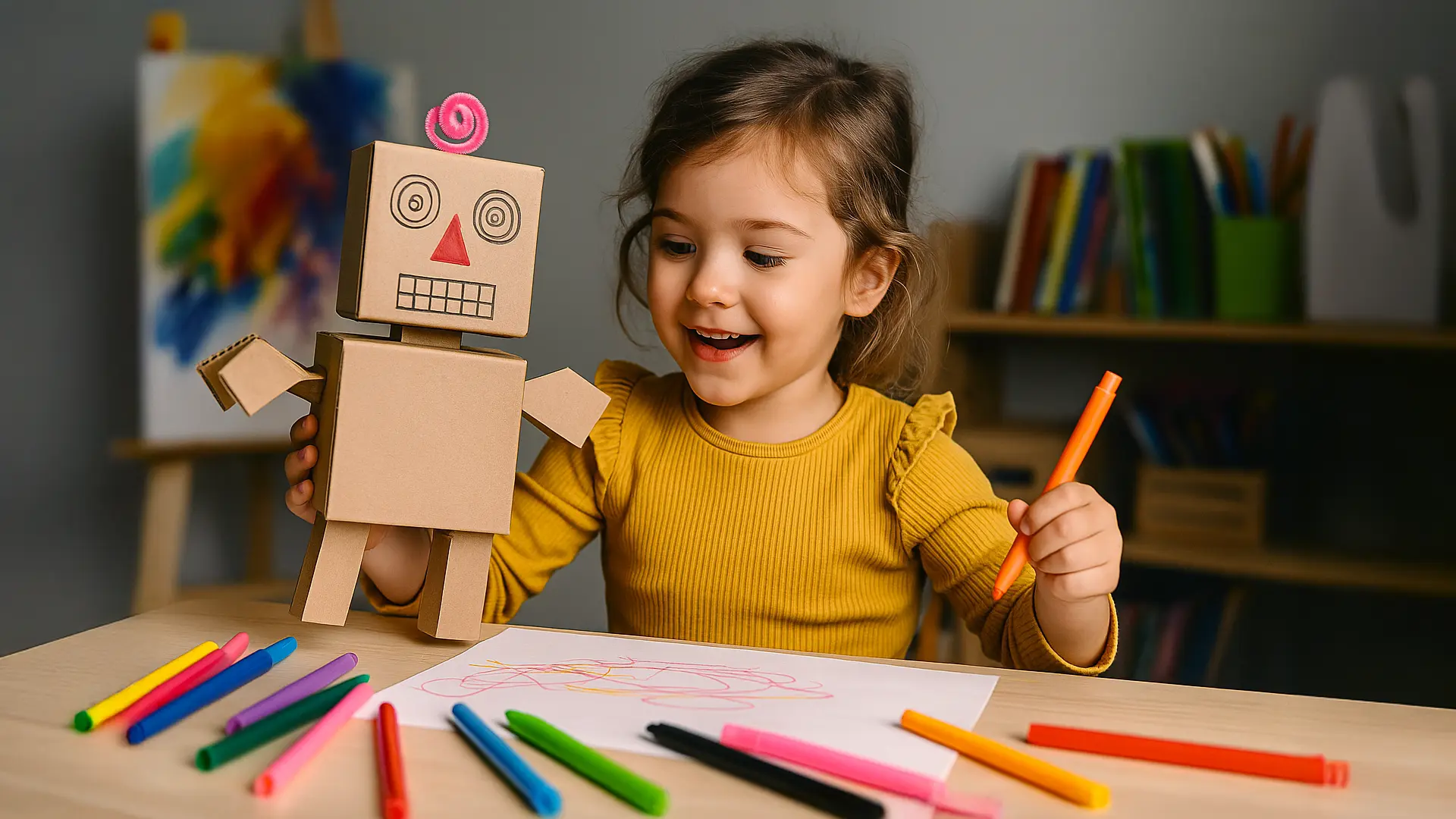
- Offer props like scarves, cardboard boxes, or puppets
- Join their world—play “restaurant,” “zoo,” or “space adventure” together
- Let them be the storyteller (and you just follow their lead!)
🗣️ Ask Open-Ended Questions
Instead of asking “Did you have fun?”, try questions like:
- “What did your dragon look like?”
- “How would you solve this if you were a superhero?”
- “What happens next in your story?”
These types of questions stimulate imaginative thinking and show your child that their ideas are valued.
🖌️ Make Creativity Part of Everyday Life
You don’t need a special art day to spark imagination. Try these fun, simple habits:
- Storytelling at bedtime: Take turns inventing stories or creating silly twists to familiar tales.
- Drawing challenges: Give a theme like “underwater city” or “flying machines” and draw together.
- Nature walks with a twist: Ask “What do you think this tree is dreaming about?”
Even baking can be creative—let your child invent a new cookie shape or give names to their culinary inventions!
🧩 Let Them Get Bored
Yes, you read that right. Boredom is actually the gateway to creativity. When a child is bored, their brain starts to imagine, explore, and build.
So resist the urge to fill every moment with structured activities. Give space for their ideas to unfold.
🧠 No “Right” Way to Be Creative
One child might love to draw. Another might dance, build, or tell jokes. Creativity shows up in different ways. Your job isn’t to direct it—but to nurture it.
Remember: it’s not about performance or perfection. It’s about exploration, joy, and expression.
❓ Q&A Section
Q: Why is creativity important in childhood?
A: Creativity helps children build problem-solving skills, express emotions, and develop confidence. It’s also linked to cognitive growth and flexibility.
Q: What kind of activities boost creativity?
A: Open-ended play, storytelling, drawing, nature walks, and asking “what if” questions all help nurture a child’s imagination.
Q: Can screens hurt creativity?
A: Too much passive screen time can limit imaginative play. But when used intentionally (like apps that encourage storytelling), technology can support creativity too.
Q: Is it okay for my child to be bored sometimes?
A: Yes! Boredom often sparks new ideas. It gives kids time to think creatively and invent their own games or stories.
Sources
- Harvard Graduate School of Education
- Child Mind Institute
- NAEYC - Creativity in Early Childhood



0 Comments