


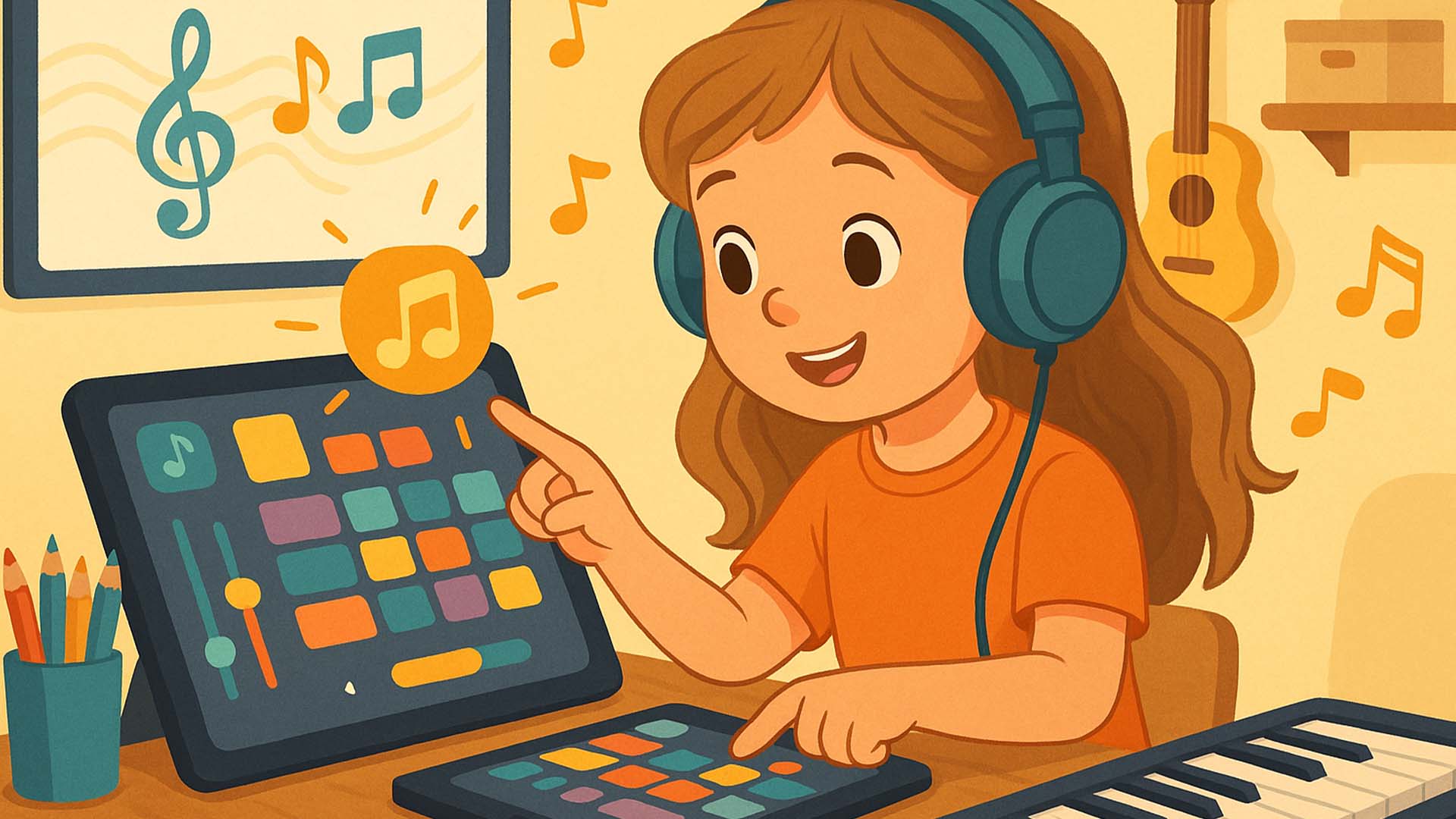
Technology is transforming how children experience music. AI-assisted interactive music creation platforms enable kids to step into the shoes of composers—selecting instruments, building melodies, and remixing beats with simple taps or voice commands. These tools blend learning and play, teaching foundational concepts like rhythm, harmony, and structure while fostering experimentation and confidence. Whether at home or in the classroom, families can now create original songs together, sparking a lifelong love of music.
Why AI Music Tools Matter
- Democratizes Composition: Intuitive interfaces remove technical barriers, letting children focus on creativity.
- Adaptive Learning: AI analyzes a child’s input and offers real-time suggestions—chord progressions, harmonies, or rhythmic patterns—to guide improvement.
- Multisensory Engagement: Visual feedback, interactive tutorials, and gamified challenges reinforce musical concepts.
- Family Bonding: Collaborative modes allow parents and siblings to join in composing sessions, sharing the musical journey.
Top Platforms to Try
- Melody Magic Jr.: Offers drag-and-drop song blocks and AI-generated accompaniment that adapts to a child’s style.
- BeatBots: Visual blocks represent beats and instruments; AI remixes user-created loops into full tracks.
- Harmony Helper: Uses voice input—children hum a tune, and the AI transforms it into a polished arrangement with virtual instruments.
Benefits for Development
- Cognitive Skills: Pattern recognition, memory, and sequencing are exercised through arranging musical elements.
- Self-Expression: Kids convey emotions and ideas in a new medium, boosting confidence.
- Technical Literacy: Familiarity with AI concepts and digital tools prepares children for future STEM learning.
Getting Started
- Choose Age-Appropriate App: Look for kid-friendly UX and built-in safety controls.
- Set Creative Goals: Prompt children to compose theme songs for stories or remix family favorites.
- Celebrate Creations: Record and share tracks with relatives or host a mini “family concert.”
Conclusion
AI-assisted interactive music creation tools invite children to become musical innovators—learning, playing, and bonding as they compose original works. These platforms open new creative frontiers, making music education accessible, engaging, and deeply rewarding for families.
Q&A Section
Q1: What age is best for trying AI music creation apps?
A1: Most platforms cater to ages 6–12, though simpler modes make them accessible to younger children under guidance.
Q2: Do these tools require musical background?
A2: No—AI features scaffold learning, so even complete beginners can produce harmonious results.
Sources:
- Education Technology Today report on AI in music education
- WIRED feature on children’s AI music tools
- Forbes article, “How AI is Revolutionizing Music Creation”



0 Comments