



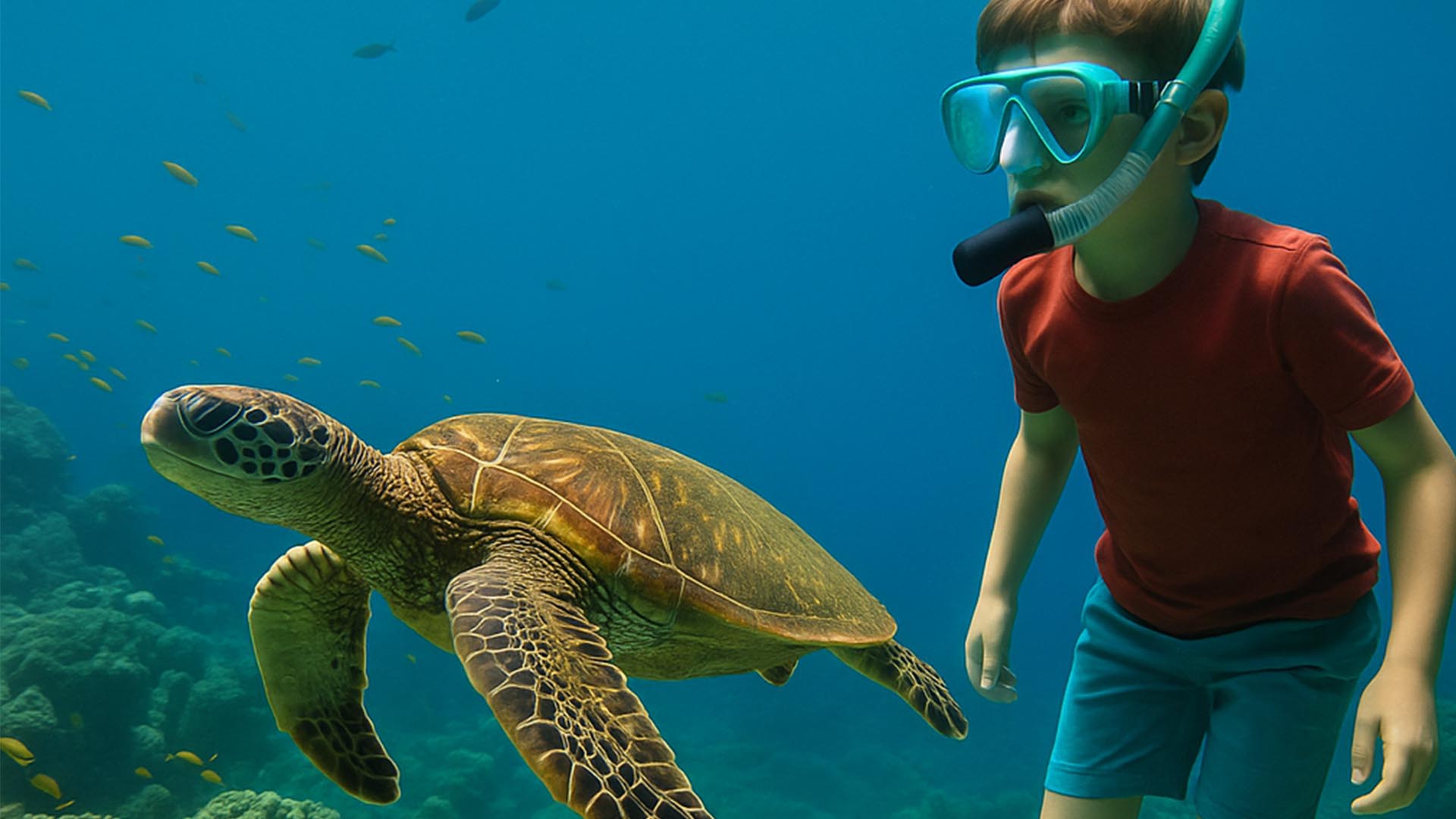
Take a deep breath and imagine diving into the vast, mysterious world of the ocean. Our oceans are one of the most amazing habitats on Earth, bursting with wildlife and teeming with secrets waiting to be solved [1]. They are so much more than just big bodies of water—they are the lifeblood of our planet!
The ocean is so huge that it covers about 70% of the Earth’s surface and holds about 96.5% of all the water on our planet [1]. That's a lot of water! Let's dive in and explore some incredible facts about this deep blue world.
10 Facts That Will Make You Say "Wow!"
1. The Biggest Ocean
The largest ocean on Earth is the Pacific Ocean, which covers around 30% of the Earth’s surface. Its name comes from the Latin name Tepre Pacificum, which means "peaceful sea" [1].
2. The Deepest Dive
The deepest known area of the Earth’s oceans is the Mariana Trench. Its deepest point measures a staggering 11 kilometers (almost 7 miles) down! That's a long, long way to the bottom [1].
3. Our Oxygen Factory
Did you know that about 70% of the oxygen we breathe is produced by the oceans [1]? Tiny ocean plants called phytoplankton are responsible for creating the air we need to live. Thank you, ocean!
4. The Longest Mountain Range
The longest mountain range in the world is not on land—it's underwater! The Mid-Oceanic Ridge stretches over 56,000 kilometers (35,000 miles) and runs along the center of the ocean basins [1].
5. A Museum Under the Sea
The sea can be described as the planet’s mega museum. There are more artifacts and remnants of history in the ocean than in all of the world’s museums combined [1]!6. The Great Barrier Reef
The sea is home to the world’s largest living structure: the Great Barrier Reef. Measuring around 2,600 kilometers (1,600 miles), it's so huge it can even be seen from the Moon [1]!
7. Masters of Disguise
The world’s oceans are home to incredible creatures that are masters of disguise, like the camouflage octopus or the stonefish. They are perfectly adapted to their watery homes [1].
8. Still a Mystery
We have only explored about 5% of the world’s oceans [1]. That means there is still a huge amount of the deep blue that remains a mystery, waiting for scientists and explorers to discover!
9. The Ocean's Temperature Control
The ocean acts like a giant thermostat for the planet. It absorbs heat from the sun and moves warm and cold water around the globe, which helps control our weather and climate [2].
10. A Source of Food
The ocean is a great source of food for people around the world, providing fish, shellfish, and other resources that support millions of people [2].
How You Can Be an Ocean Conservation Hero
The ocean needs our help! Pollution, especially plastic, is a big problem for sea creatures. Here are a few simple ways you can become an ocean hero:
•Reduce Plastic: Say "No" to single-use plastics like straws, plastic bags, and water bottles. Use reusable items instead.
•Recycle: Make sure you recycle all your plastic, paper, and glass so it doesn't end up in the ocean.
•Clean Up: Join a beach or park clean-up day. Even picking up trash in your neighborhood helps, as rain can wash litter into rivers and eventually to the sea.
•Learn More: Keep reading and learning about the ocean and the amazing animals that live there. The more you know, the more you can help!
Did you know that National Geographic Kids has a FREE downloadable Plastic Pollution primary resource, all about protecting our oceans and sea life? [1]
Q&A (Questions and Answers)
Q: Why is plastic so bad for the ocean? A: Plastic does not break down easily. Sea animals can mistake plastic bags for food, or they can get tangled up in plastic waste. This is very dangerous for them and harms the ocean ecosystem.
Q: What is a "phytoplankton"? A: Phytoplankton are tiny, microscopic plants that float in the ocean. They are super important because they use sunlight to create their own food and, in the process, release a huge amount of the oxygen we breathe!
Q: Are there mountains in the ocean? A: Yes! The Mid-Oceanic Ridge is the longest mountain range in the world, and it's completely underwater. It's a massive chain of volcanoes and valleys that stretches across the globe.



0 Comments