



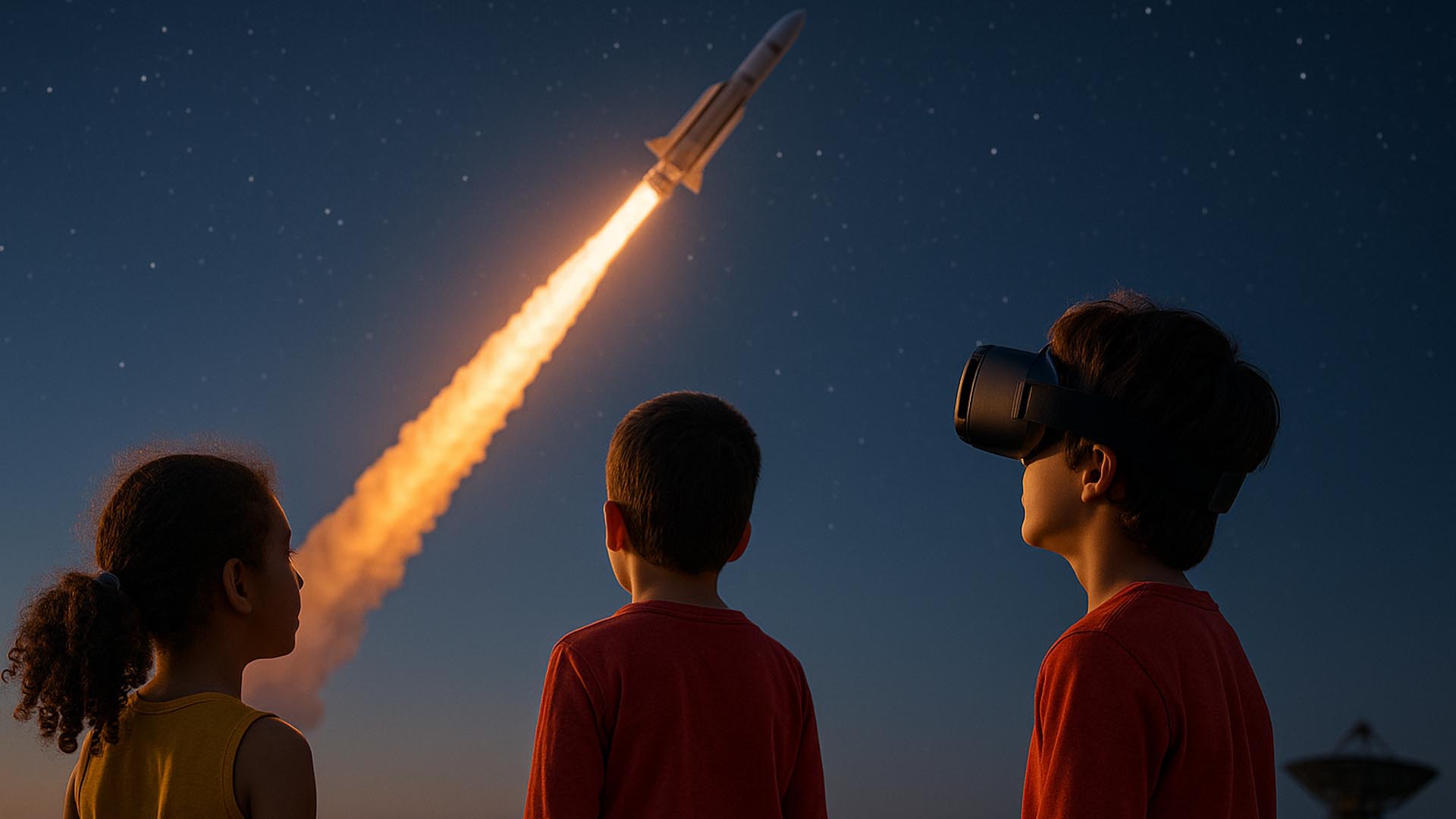

Have you ever looked up at the night sky and wondered what secrets the stars hold? For thousands of years, humans have been fascinated by the cosmos. Space exploration is our incredible journey to discover what lies beyond Earth, using amazing rockets, satellites, and brave astronauts. It's not just about traveling far away; it's about learning more about our own planet and our place in the universe. This adventure has led to some of the most exciting discoveries in history!
The Giant Leap: Why We Explore
Space exploration is one of humanity's greatest adventures. It helps us answer big questions like: Are we alone? How did the universe begin? And how can we protect our home planet, Earth?
Rockets: Our Tickets to Space
Rockets are the powerful machines that launch spacecraft into orbit and beyond. They work by burning fuel very quickly to create a massive push, or thrust, that overcomes Earth's gravity. The first successful artificial satellite, Sputnik 1, was launched by the Soviet Union in 1957, marking the beginning of the Space Age. Since then, rockets have become much more advanced, carrying everything from weather satellites to rovers that explore other planets.
Exploring Our Solar System
Our solar system is filled with incredible places to visit. We've sent robotic explorers, called provers and landers, to Mars, where they search for signs of ancient water and life. The Curiosity and Perseverance rovers are currently sending back amazing pictures and data from the Red Planet. We've also sent probes to study giant planets like Jupiter and Saturn, giving us close-up views of their swirling storms and beautiful rings.
Living and Working in Space
Astronauts live and work on the International Space Station (ISS), a giant science laboratory orbiting Earth. Life in space is very different! Because of microgravity, astronauts float everywhere. They have to exercise for hours each day to keep their bones and muscles strong. They conduct important experiments that help us understand how things work in space and prepare for even longer journeys, like a trip to Mars.
"Space is an inspirational source of wonder and curiosity for children, encouraging them to pursue careers in science and engineering." - NASA
Q&A: Your Space Questions Answered
Q: How long does it take to get to Mars? A: A trip to Mars usually takes about seven to nine months, depending on the speed of the spacecraft and the alignment of the planets.
Q: What is the biggest planet in our solar system? A: Jupiter is the biggest planet. It is so massive that all the other planets in the solar system could fit inside it!
Q: Can we breathe in space? A: No, space is a vacuum, which means there is no air. Astronauts must wear special pressurized suits with their own oxygen supply to survive outside the spacecraft.



0 Comments