


Imagine a school where you get to help pick the lessons, where your classroom might be a museum or a forest, and where you can learn at the exact speed that is best for you. This is the world of flexible learning, and two popular ways to do it are homeschooling and microschooling.
These learning adventures are becoming more popular because they offer a personalized way to learn, focusing on a child's unique interests and pace 1.
Homeschooling: Learning at Your Own Pace
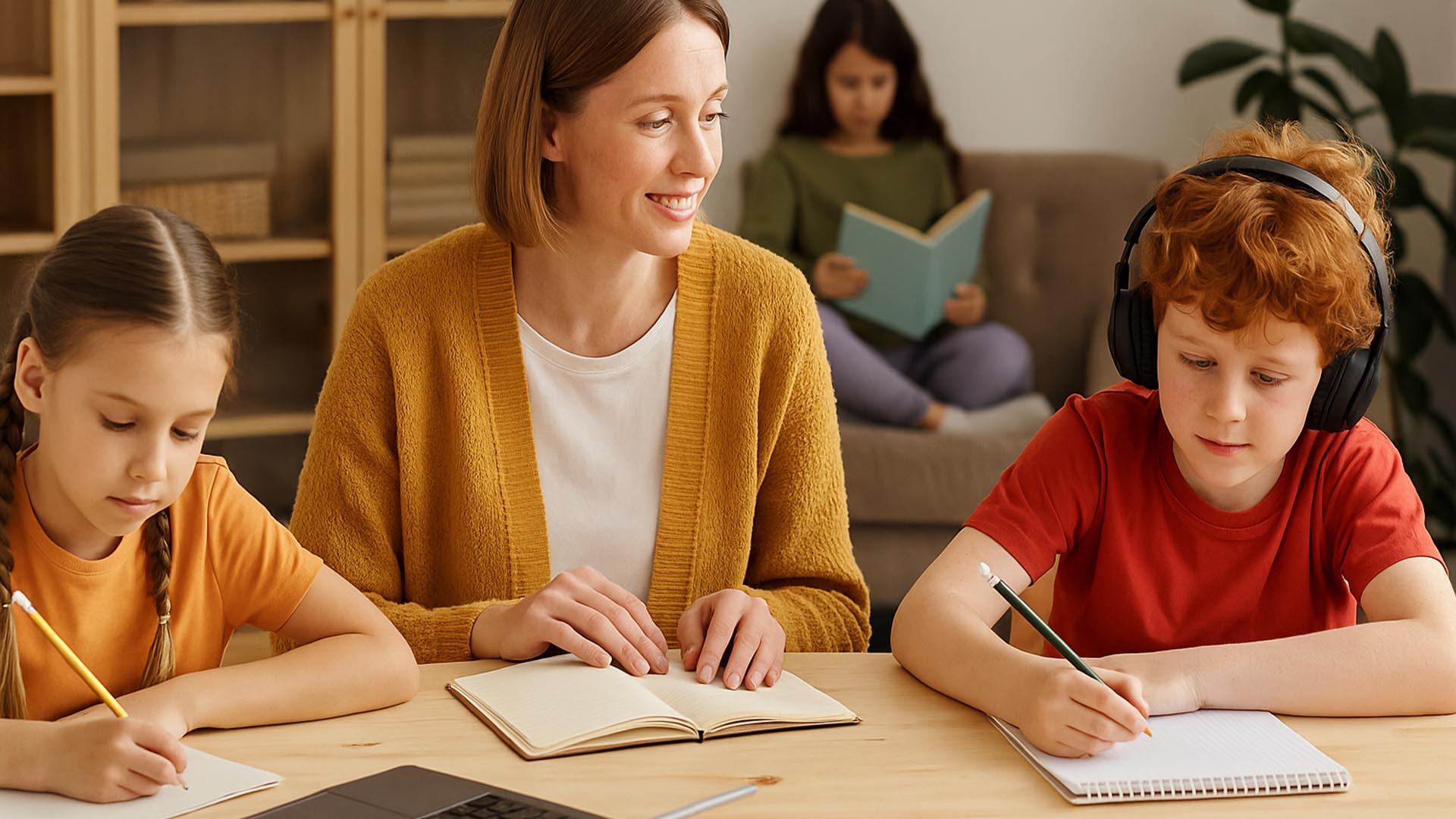
Homeschooling means that a child's education happens primarily at home, guided by their parents or a tutor. It’s a chance to turn the whole world into a classroom!
•Flexible Schedule: You can learn math at 10 AM and visit the science museum at 2 PM. You can take a week off for a special family trip and make up the lessons later.
•Personalized Lessons: If you love dinosaurs, you can spend extra time reading about paleontology. If you struggle with a subject, you can slow down and get extra help without feeling rushed.
•Real-World Learning: Homeschooling often involves co-ops, where groups of families meet for classes, and lots of field trips to libraries, historical sites, and nature centers.
Microschools: The Tiny Classroom
A microschool is like a tiny, super-focused traditional school. It’s a small group of students—often fewer than 15—who learn together in a mixed-age setting, often led by one teacher.
Microschools blend the best parts of both worlds:
1.Small Group Fun: You get the social interaction of a classroom but in a small, supportive group.
2.Tailored Education: The teacher can easily adapt the lesson to each student's needs and interests.
3.Community Focus: Microschools often use the local community as a resource, with lessons taking place in parks, community centers, or even a parent's home.
The growth of these alternative pathways is a major trend in education 2.
Is This Right for Me? (The Big Decision)
Choosing how to learn is a big decision for a family. Here are some things to think about:
| Feature | Homeschooling | Microschooling |
| Class Size | Usually 1-5 (siblings/co-op) | Usually 5-15 students |
| Teacher | Parent or hired tutor | Certified or experienced educator |
| Location | Mostly at home, plus field trips | Dedicated small space or home |
| Flexibility | Very High (set your own schedule) | High (more flexible than a big school) |
| Socializing | Co-ops, clubs, and community activities | Daily interaction with a small group |
Whether you are in a traditional school, a microschool, or learning at home, the most important thing is to be curious, engaged, and to love learning!
Q&A: Your Learning Adventure Questions Answered
Q: Do I have to wear a uniform in a microschool? A: It depends on the specific microschool! Since they are all different, some might have a simple dress code, and others might let you wear whatever you like. It's something you can ask the school's leader.
Q: How do homeschooled kids learn science experiments? A: They do them! Homeschoolers often do experiments in their kitchen, backyard, or at special science co-op classes. They can also take online classes or visit science centers for hands-on learning.
Q: What is the biggest benefit of flexible learning? A: Many people say the biggest benefit is the ability to follow your passions. If you are fascinated by history, you can spend extra time on it. If you need more time to master a skill, you get that time. It's all about making learning work for you.
Sources
[1] 5 Trends Reshaping K-12 Education Across the U.S. The 74 Million.
[2] 12 Top Parenting Trends in 2025 (Experts Predict). Family Education.
[3] The growth of homeschooling and microschooling. The 74 Million.


0 Comments