


Music isn’t just about melodies - it’s a magical tool that helps children learn faster, express emotions, and grow their brains. Whether it’s tapping a beat or learning a full song, introducing your child to a musical instrument is one of the best gifts you can give.
But where should you start?
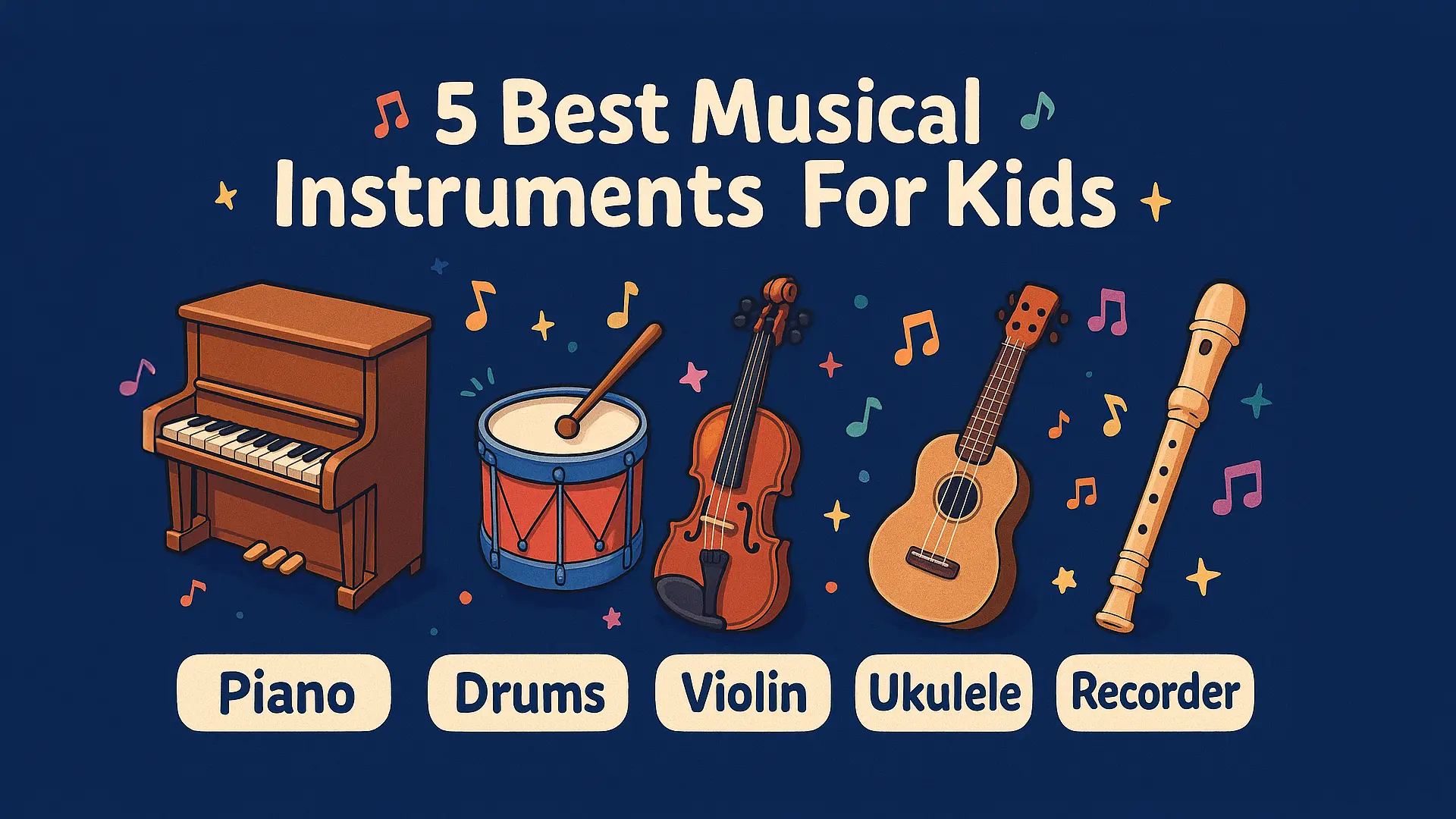
Here are 5 kid-friendly instruments that are perfect for beginners and proven to support your child’s brain, body, and confidence.
🎹 1. Piano – The Foundation of Music
Why it’s great:
The piano teaches kids about notes, rhythm, harmony, and finger coordination—all at once. With visual patterns (white and black keys), it's easy for young minds to understand.
Brain benefits:
- Boosts memory and focus
- Helps with math and spatial reasoning
- Builds strong hand-eye coordination
Age to start: As early as 4–5 years old with simple songs
Bonus: Even if your child doesn't become a pianist, piano skills transfer easily to other instruments later on.
🥁 2. Drums or Percussion – For Energy and Rhythm
Why it’s great:
For kids who love to move, drums offer a creative and healthy outlet. Even a small bongo, tambourine, or cajón can be enough to start.
Brain benefits:
- Improves timing, pattern recognition, and listening
- Supports emotional regulation through movement
- Helps with teamwork in group activities
Age to start: 3+ for rhythm play, 6+ for structured lessons
Tip: Use a rhythm game like clapping patterns to practice anywhere!
🎻 3. Violin – Small but Powerful
Why it’s great:
The violin comes in smaller sizes, perfect for little hands. It teaches discipline, posture, and ear training, making it a wonderful long-term instrument.
Brain benefits:
- Sharpens listening and pitch recognition
- Boosts patience and perseverance
- Strengthens fine motor control
Age to start: 5–7 years old with child-sized violins
Many school programs offer string instruments early—take advantage!
🎸 4. Ukulele – Tiny, Fun, and Easy to Learn
Why it’s great:
Unlike a full guitar, the ukulele is light, has soft nylon strings, and fits perfectly in small arms. Kids can strum simple chords and sing along quickly.
Brain benefits:
- Builds self-confidence fast (it’s easy to sound good!)
- Enhances auditory memory
- Encourages singing and self-expression
Age to start: 4–6 years old
The ukulele is great for shy kids—it’s friendly and not intimidating.
🎺 5. Recorder – The School Favorite That Teaches Breath and Focus
Why it’s great:
Many schools use recorders because they’re affordable and perfect for learning notes, breath control, and finger placement.
Brain benefits:
- Develops lung control and breath awareness
- Teaches sequencing and melody structure
- Sharpens focus and discipline
Age to start: Around 6–8 years old
Start with simple songs like “Twinkle Twinkle” or “Hot Cross Buns.”
🎶 Why Music Helps the Brain
Research shows that music improves:
- Memory and attention
- Language development
- Emotional intelligence
- Coordination and discipline
- Confidence and social skills
According to the National Institutes of Health, music activates both sides of the brain, connecting emotion with logic. Children who play instruments often do better in school and show improved communication skills.
🧠 Quick Tips for Parents
- Let kids choose their favorite instrument (motivation matters!)
- Keep early sessions short and fun—consistency is better than long lessons
- Celebrate every small win—they’re building more than music skills!
- Don’t worry if they switch instruments—every one builds musical foundations
✅ Summary
You don’t need to be a music expert to raise one. Introducing your child to a musical instrument boosts more than talent—it supports emotional growth, brain development, and lifelong creativity.
So whether it’s a tiny ukulele or a kitchen-pot drum, let the music begin—and let your child discover the joy of making sound with their own hands.
🔎 Q&A
Q: What is the best first instrument for kids?
A: Piano and ukulele are great starting points due to simplicity and visual learning. Drums are great for energetic kids.
Q: At what age should kids start music lessons?
A: Many kids can start informal music play at age 3–4. Structured lessons can begin around age 5–7 depending on the instrument.
Q: Does music really help with brain development?
A: Yes! Music improves memory, focus, coordination, and emotional skills according to research from NIH and Harvard studies.
Q: My child wants to quit. Should I let them?
A: It’s okay to explore! Trying different instruments is part of finding what they love.
Q: Are online music classes effective?
A: Yes, especially when paired with parental support and practice time. Many great beginner platforms exist for kids.
Sources:
- NIH – Music and the Developing Brain
- Verywell Family – Best Musical Instruments for Kids
- Children’s Music Workshop – Benefits of Music Education


0 Comments