



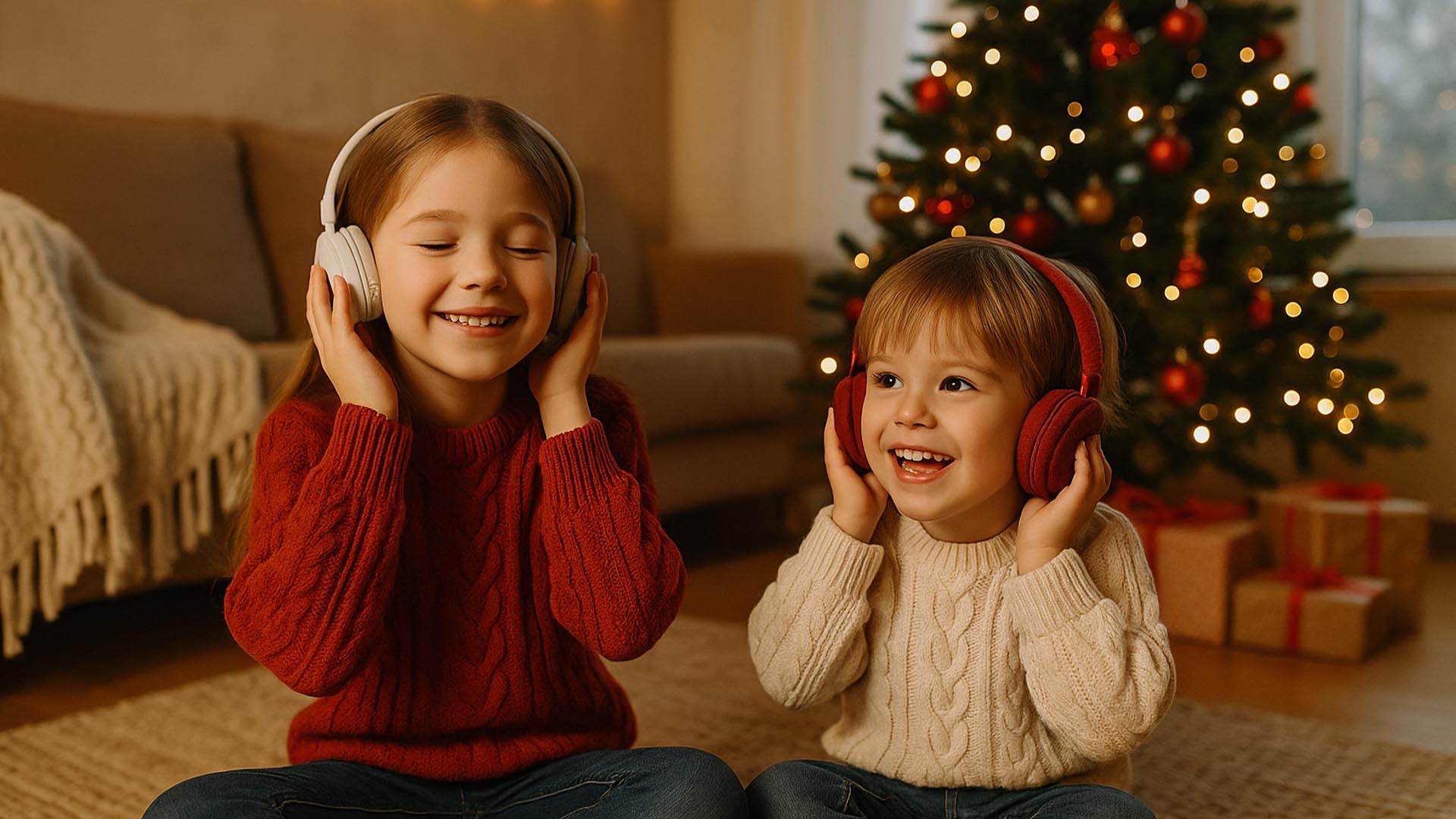
Christmas arrives each year wrapped in lights, warm traditions, and a soundtrack that children instantly recognize. From the first jingle of bells to soft carols at bedtime, Christmas music seems to affect kids differently than any other holiday sound. But why does it have such a strong impact?
And how can parents use Christmas songs not only to create memories, but also to support learning and emotional development?
This article explores the science of why festive songs work so well for children and gives practical ways to turn Christmas music into meaningful educational moments at home.
Why Christmas Music Feels Magical to Children
Holiday songs often use simple melodies, predictable patterns, and warm instrumentation such as bells, soft drums, pianos, and strings. These cues activate areas of the brain related to comfort and familiarity.
The psychological effect
Studies show that repeating melodic patterns help children feel safe and calm, especially when paired with traditions they experience yearly.
Emotional memory
Children build strong associations with music. Hearing a certain carol may remind them of decorating the tree, baking with grandparents, or staying up late to watch holiday lights. These emotional links make the music more powerful.
Family bonding
When families sing together, oxytocin levels rise. This hormone increases connection and reduces stress.
How Christmas Songs Help With Learning
Holiday music is not just entertainment. It’s an excellent tool for developing:
1. Language skills
Lyrics introduce new vocabulary, rhyme patterns, and phonetic repetition.
2. Memory
Repetition in carols strengthens working memory.
3. Emotional intelligence
Songs tell stories about kindness, hope, sharing, and togetherness.
4. Cultural literacy
Children learn about holiday symbols, traditions, and historical contexts.
5. Creativity
Kids often dance, act out scenes, or create their own versions of songs.
Using Christmas Music for Daily Learning
Here are easy activities parents can try:
Sing-and-point reading
Display lyrics on a screen or paper and point to each word while singing. This builds print awareness.
Musical storytime
Choose a Christmas song with a clear narrative, then ask kids to retell the story in their own words.
Music and movement
Let children create simple dance steps based on rhythm.
Sound exploration
Provide bells, wooden spoons, cups, or small drums for rhythm imitation.
Quiet carols for bedtime
Slow holiday songs help regulate breathing and create predictable nighttime routines.
Why Parents Should Embrace Holiday Music
In a season full of excitement, late nights, and schedule changes, Christmas music offers stability. Familiar songs help children navigate emotional highs and lows while strengthening bonds with family.
Q&A Section
Why do kids react so strongly to Christmas music?
Because holiday songs create emotional memories and use simple, repetitive patterns that comfort the brain.
Does Christmas music help with learning?
Yes. It supports vocabulary growth, memory, emotional expression, and creativity.
How much holiday music is healthy for kids?
Experts recommend moderation: daily exposure is great, but balance energetic songs with calm carols.



0 Comments