



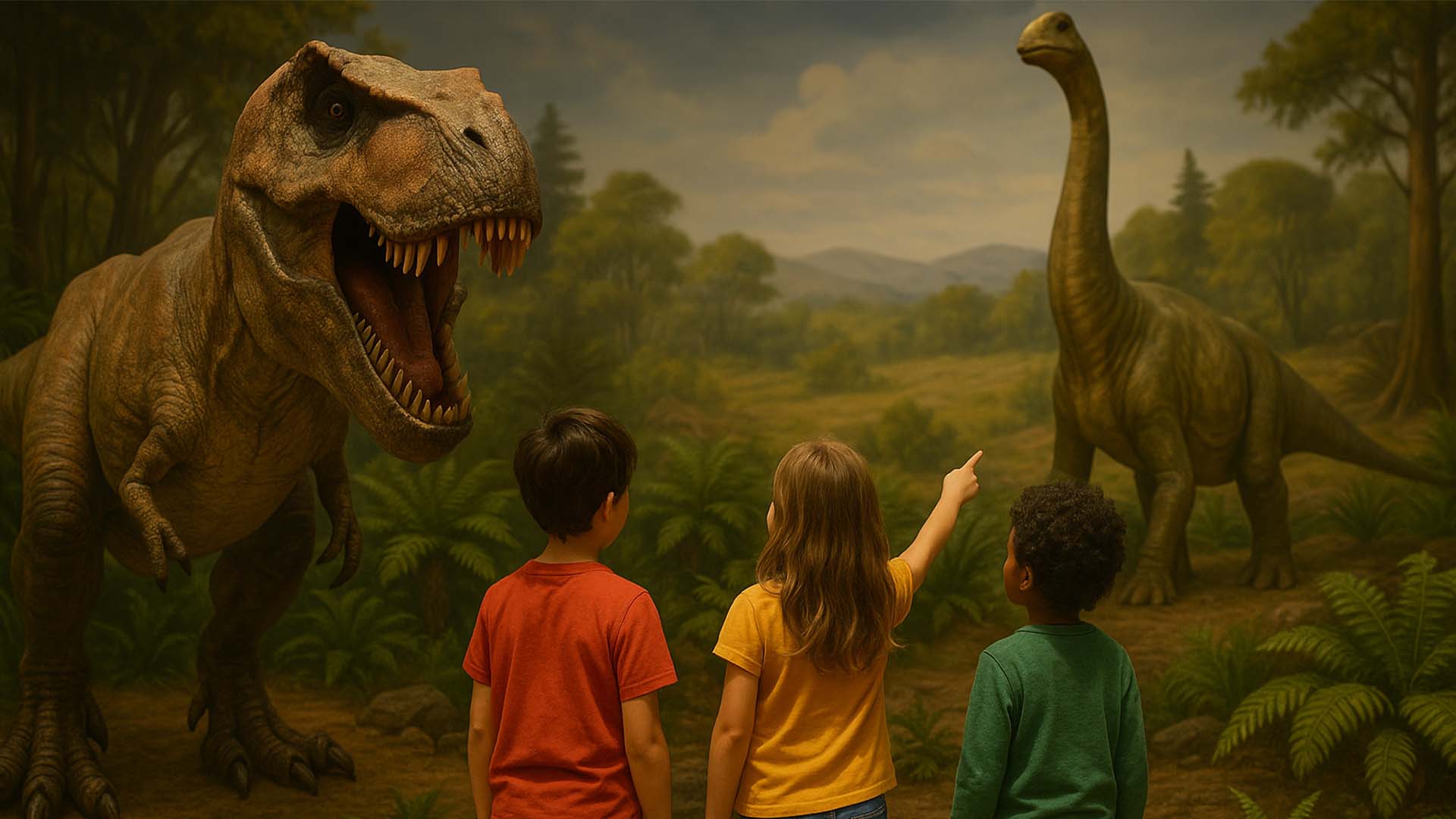

Dinosaurs roamed the Earth millions of years ago, and their incredible story continues to captivate the imaginations of children and adults alike. From the mighty Tyrannosaurus Rex to the gentle, long-necked Brachiosaurus, the world of dinosaurs is a fascinating realm of discovery. This article takes you on a journey back in time to explore what dinosaurs were, how they lived, and how we know so much about them today.
Main Content
What Were Dinosaurs?
Dinosaurs were a diverse group of reptiles that lived during the Mesozoic Era, which is also known as the Age of Dinosaurs. This era is divided into three periods: the Triassic, Jurassic, and Cretaceous. Dinosaurs came in all shapes and sizes, from the chicken-sized Compsognathus to the enormous Argentinosaurus, which was as long as two school buses! [1].
What Did Dinosaurs Eat?
Like animals today, dinosaurs had different diets:
- Herbivores: These dinosaurs were plant-eaters. They had teeth that were good for grinding and chewing tough plants. Examples include the Triceratops, with its three horns, and the Stegosaurus, with its bony plates.
- Carnivores: These dinosaurs were meat-eaters. They often had sharp, pointed teeth for tearing flesh. The most famous carnivore is the Tyrannosaurus Rex, but there were many others, like the Velociraptor.
- Omnivores: Some dinosaurs ate both plants and meat. These were called omnivores.
How Do We Know About Dinosaurs?
We learn about dinosaurs through fossils, which are the preserved remains or traces of ancient life. Scientists who study fossils are called paleontologists. They dig up dinosaur bones, teeth, and even fossilized footprints to piece together what these amazing creatures looked like and how they lived. By studying fossils, paleontologists can learn about a dinosaur's size, diet, and behavior [1].
Why Did Dinosaurs Disappear?
About 66 million years ago, at the end of the Cretaceous period, the dinosaurs (except for those that evolved into birds) went extinct. The most widely accepted theory is that a giant asteroid hit the Earth, causing massive environmental changes that the dinosaurs could not survive. This event created a huge dust cloud that blocked out the sun, leading to the death of plants and, subsequently, the dinosaurs that depended on them [1].
Q&A
Q: Were all dinosaurs big?
A: No, not all dinosaurs were giants. While some, like the Brachiosaurus, were enormous, others were much smaller. The Compsognathus, for example, was only about the size of a chicken.
Q: Did dinosaurs and humans live at the same time?
A: No, dinosaurs and humans did not live at the same time. Dinosaurs went extinct about 66 million years ago, while the earliest human ancestors appeared only a few million years ago.
Q: What is a paleontologist?
A: A paleontologist is a scientist who studies fossils to learn about the history of life on Earth. They are like detectives who use clues from the past to understand ancient creatures like dinosaurs.
Sources
[1] Start with a Book. (n.d.). Dinosaurs. Retrieved from https://www.startwithabook.org/summer-reading-learning/dinosaurs



0 Comments