



Play is often seen as just fun and games, but for children, it's much more than that. Play is a powerful tool for learning and development, helping kids grow in countless ways. From building social skills to sparking creativity, play-based learning is a magical journey that prepares children for a lifetime of discovery. Let's explore why play is so important and how it helps our little ones thrive.
How Play Boosts Cognitive Development
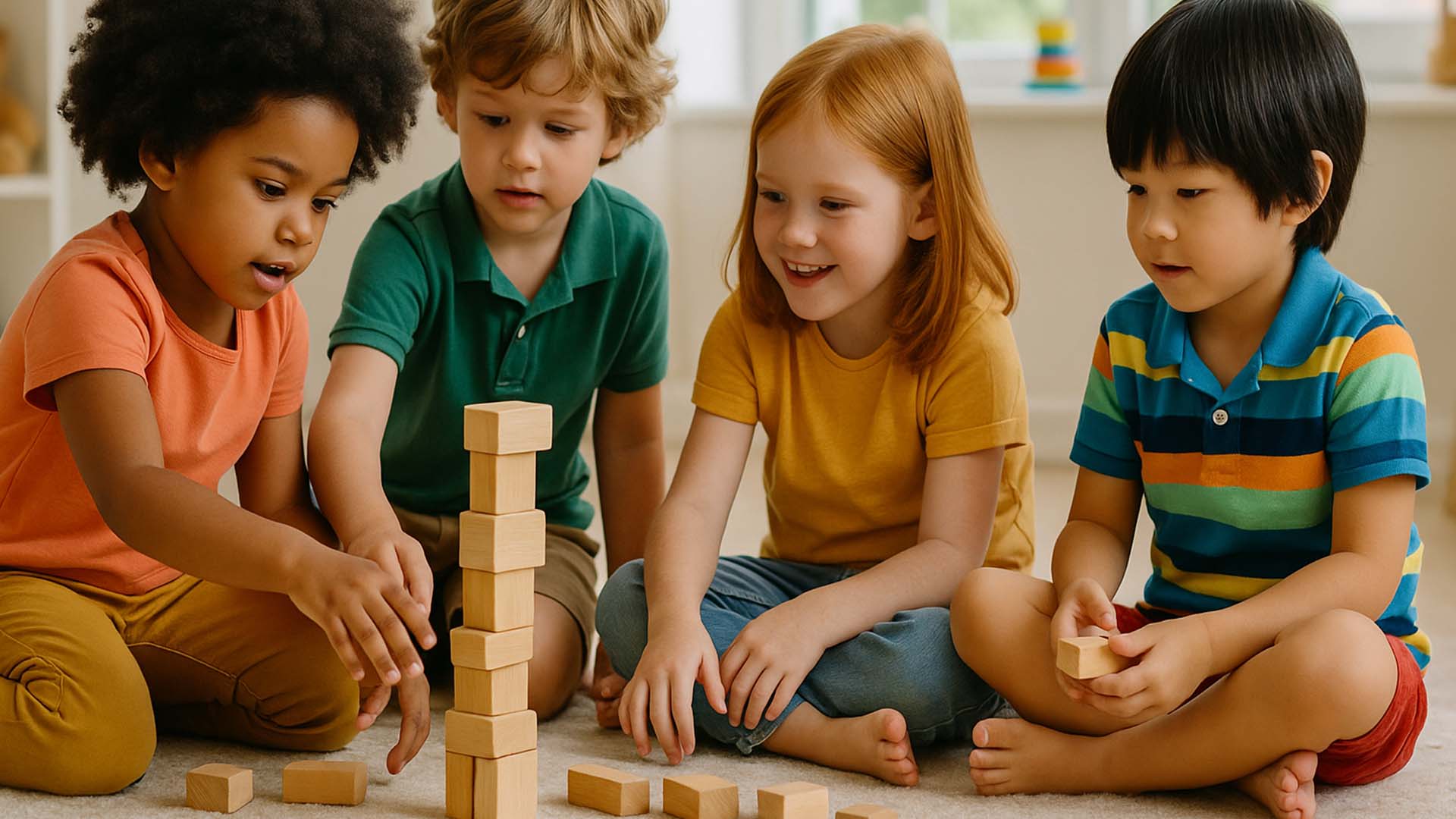
Play is a natural way for children to explore the world around them and develop crucial cognitive skills. When children engage in play, they are actively problem-solving, experimenting, and making sense of new information. For instance, building with blocks helps them understand concepts like balance and spatial reasoning. Research shows that play-based learning can be even more effective than direct instruction in improving outcomes for early learners [1]. Through play, children learn about relationships, language, math, science, and how to solve problems [2].
"Play provides children with opportunities to learn about and master relationships, language, math, science, problem solving, and their bodies." [2]
Enhancing Social and Emotional Skills Through Play
One of the most significant benefits of play is its role in fostering social and emotional development. When children play together, they learn to share, cooperate, negotiate, and understand different perspectives. Pretend play, in particular, is vital for developing social cognition and processing real-life situations [3]. It helps children build empathy, manage their emotions, and develop strong interpersonal skills. Play encourages children's initiative, independence, and problem-solving, and has been linked to benefits in social and emotional development [4].
Sparking Creativity and Imagination
Play is the ultimate playground for a child's imagination. Whether they're building a fort, pretending to be a superhero, or creating a fantastical world, children use play to express their creativity and explore new ideas. Imaginative play encourages abstract thinking and problem-solving skills [5]. This kind of open-ended play allows children to think outside the box, develop their own narratives, and come up with innovative solutions, all of which are essential for future learning and success.
Physical Benefits of Active Play
Beyond cognitive and socio-emotional growth, play also offers significant physical benefits. Active play, such as running, jumping, and climbing, helps children develop gross motor skills, coordination, and balance. It also promotes a healthy lifestyle and helps prevent childhood obesity. Outdoor play, in particular, provides opportunities for children to connect with nature, explore their environment, and engage in physical activity that is crucial for their overall well-being.
Q&A
Q1: How does play help a child's cognitive development?
A1: Play helps children explore, problem-solve, experiment, and understand new information, leading to improved cognitive skills like spatial reasoning and critical thinking.
Q2: Why is pretend play important for social skills?
A2: Pretend play allows children to practice social interactions, learn to share, cooperate, negotiate, and develop empathy, which are crucial for social and emotional growth.
Q3: What are the physical benefits of active play?
A3: Active play helps children develop gross motor skills, coordination, and balance, promotes a healthy lifestyle, and encourages physical activity essential for overall well-being.
Sources
[1] Edutopia. (2022). For Young Kids, The Power of Play-Based Learning. https://www.edutopia.org/article/young-kids-power-play-based-learning/
[2] HeadStart.gov. (2024). Importance of Play in Early Childhood. https://headstart.gov/curriculum/article/importance-play-early-childhood
[3] Child Mind Institute. (2025). The Power of Pretend Play for Children. https://childmind.org/article/the-power-of-pretend-play-for-children/
[4] NAEYC. (2022). The Power of Playful Learning in the Early Childhood Setting. https://www.naeyc.org/resources/pubs/yc/summer2022/power-playful-learning
[5] Basic Fun. (n.d.). The Importance of Imaginative Play for Children's Development. https://www.basicfun.com/the-importance-of-imaginative-play-for-childrens-development/



0 Comments