



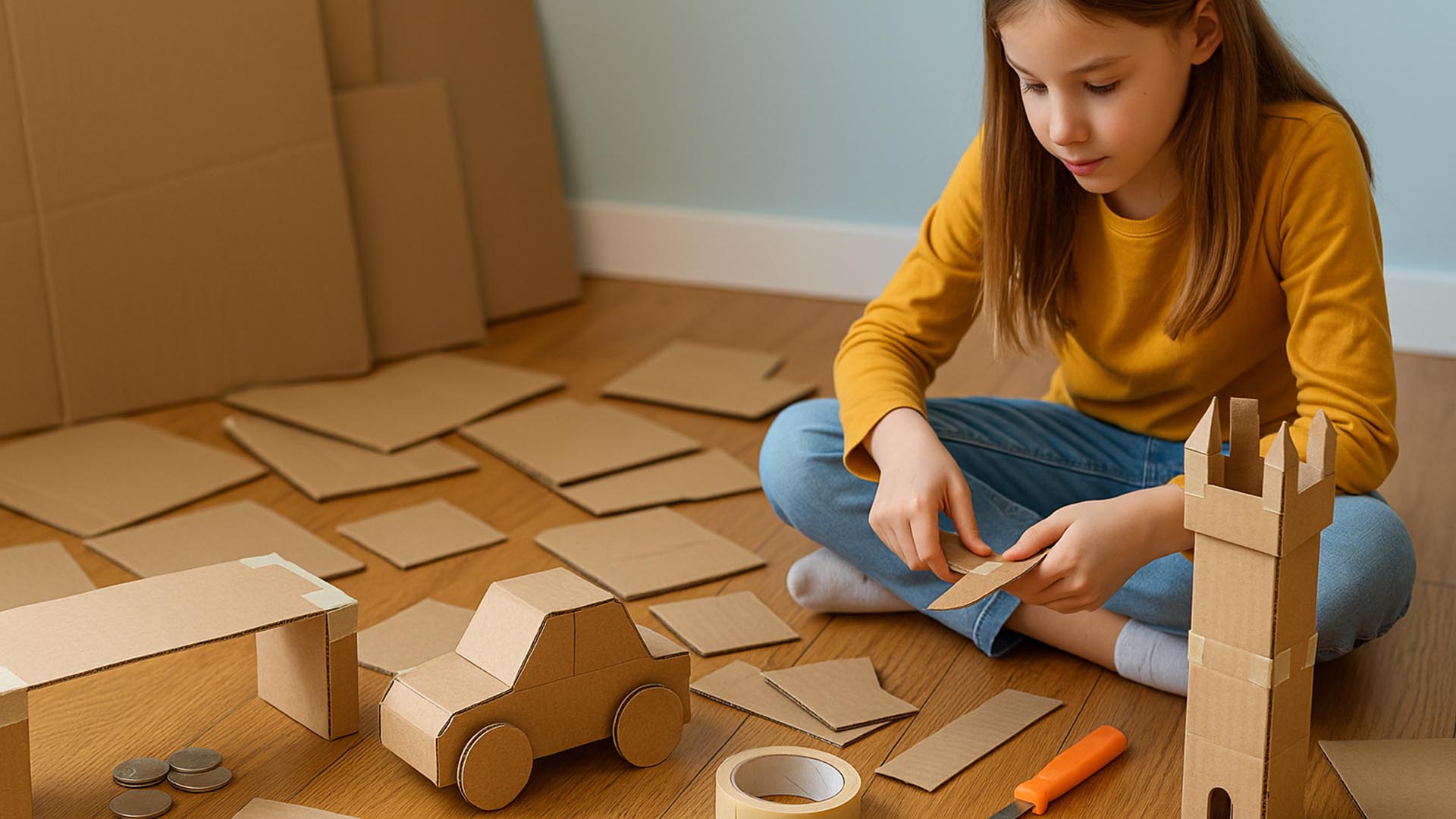

Transform your recycling bin into a maker’s workshop: with cardboard, tape, and a few simple tools, children can engineer sturdy bridges, towering skyscrapers, and wheeled vehicles. DIY cardboard engineering challenges blend creativity, basic physics, and sustainability, encouraging kids to prototype, test, and iterate. Perfect for rainy afternoons or maker club sessions, these projects teach problem-solving while giving new life to everyday materials.
Core Challenges
- Cardboard Bridge Competition: Build a beam or arch bridge across a gap—load-test with weights.
- Taco Cart Vehicle: Design a rolling cart with cardboard wheels and axles—race friends or family.
- Castle Towers: Create towers at least 50 cm tall that withstand wind from a fan.
Materials & Setup
- Cardboard boxes (various thicknesses)
- Utility knife or scissors (adult supervision)
- Masking tape, hot glue gun (optional), rulers
- Weights (coins or small books) for testing
Engineering Concepts
- Load Distribution: How beam vs. arch designs handle weight differently.
- Axles and Wheels: Friction reduction and rotational motion basics.
- Stability: Importance of base width and center of gravity in tower designs.
Benefits for Young Engineers
- Design Thinking: Prototype, test, and refine solutions in iterative cycles.
- STEM Skills: Hands-on lessons in physics, geometry, and material science.
- Environmental Awareness: Reinforces recycling and resourcefulness.
Tips for Success
- Encourage Sketching: Draw designs before cutting to plan structure.
- Test Often: Small scale tests reveal weak points early.
- Collaborate: Work in teams to brainstorm and troubleshoot.
Conclusion
Cardboard engineering challenges turn humble boxes into launching pads for innovation—teaching kids to think like engineers while emphasizing sustainability. Gather your materials, set up a maker space, and let the building begin!
Q&A Section
Q1: What ages suit cardboard engineering projects?
A1: Best for ages 7–12; younger children can participate with adult guidance on cutting and assembly.
Q2: How do we measure success?
A2: Success comes from testing and iteration—recording how much weight a bridge holds or how far a vehicle rolls.
Sources:
- Make Magazine: “Top Cardboard STEM Projects”
- Education.com: “DIY Engineering Challenges at Home”
- National Geographic Kids: “Creative Reuse Activities”



0 Comments